
As Forced ICE Collaboration Bill advances, ACLU reports on damage to public trust and civil rights
February 25, 2026 4:00 pm
Note: The ACLU report "Deputized for Disaster" is available to read here.
COLUMBIA — As South Carolina lawmakers push a bill that would force local law enforcement agencies to collaborate with Immigration and Customs Enforcement (ICE), the American Civil Liberties Union (ACLU) is issuing a report on the damage that ICE collaboration has already done to civil rights and the credibility of local police.
On Thursday, February 26, at 9 a.m., the House AI, Cybersecurity, and Special Laws Subcommittee will meet in Blatt Building Room 516 to discuss the Forced ICE Collaboration Bill, H. 4764. An agenda for that meeting is available here.
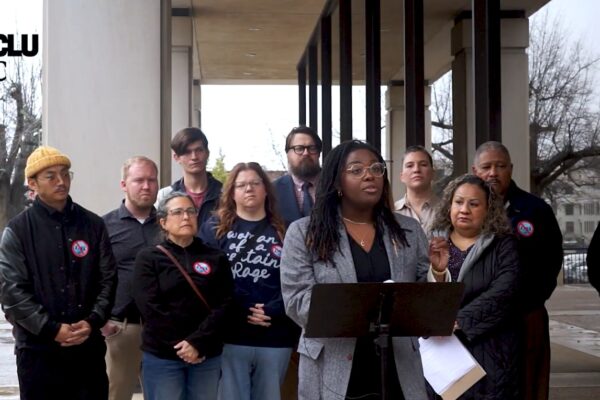
Immediately after the subcommittee meeting on the Statehouse grounds near the Blatt Building, the ACLU-SC and community leaders representing faith communities and immigrant-rights organizations will hold a press conference detailing their opposition to the bill and outlining a new report about the expansion of ICE collaboration under the 287(g) program.
WHAT: Press conference highlighting opposition to H. 4764
WHEN: Feb. 26, immediately following 9 a.m. subcommittee hearing
WHERE: South Carolina Statehouse Grounds near the Blatt Building
WHO: Representatives of the ACLU-SC, Midlands SC Defensa, and local faith communities
Thursday will mark the subcommittee’s second meeting about H. 4764. At the first meeting on Feb. 17, every public testifier voiced strong opposition to the bill. No member of the public spoke in favor of it.
The new national report publishing on Feb. 26 is titled “Deputized for Disaster: How President Trump’s supersized 287(g) deportation force is a powder keg for law enforcement, our communities, and our democracy.” An embargoed copy of the report is available on request and will be published at aclusc.org at 9 a.m. Thursday.
The report details how the Trump administration is drastically expanding the federal 287(g) program to transform state and local law enforcement into a national deportation policing force — fueling racial profiling, civil rights violations, and widespread fear in communities across the country, including in South Carolina.
The report finds that the Trump administration’s misuse of the 287(g) program has extended ICE's reach into everyday policing. As a result, state and local officers are being used to carry out “show me your papers” immigration enforcement — often during routine traffic stops — undermining public safety and diverting limited local resources away from core law enforcement responsibilities. These actions reflect a broader pattern of abusive and unconstitutional immigration practices by ICE, Border Patrol, and their partner agencies playing out nationwide.
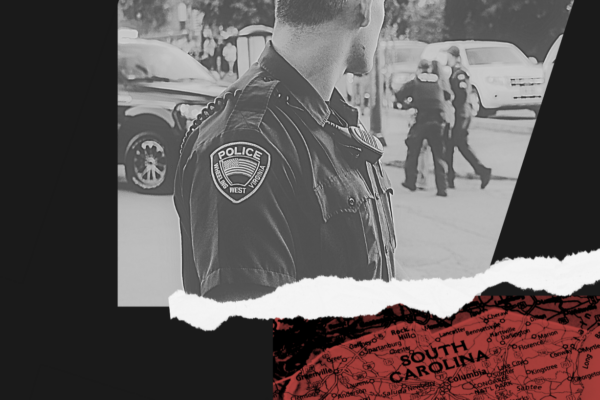
In South Carolina, ICE agreements under 287(g) were rare until the second Trump administration, when state and federal officials began pressuring local police to join the program. Between February 2025 and February 2026, the number of ICE collaboration agreements in South Carolina ballooned from 3 to 37. More details, including a list and map of these agreements, are available at aclusc.org/287g
“With this new report, we hope to highlight how lawmakers are endangering the rights and safety of their own constituents when they force local law enforcement to do the work of ICE. Here and across the country, local police are being deputized for disaster,” said ACLU of South Carolina Executive Director Jace Woodrum. “House Bill 4764 takes the decision of whether to partner with ICE away from locally elected leaders in law enforcement and forces them to sacrifice the trust and credibility they have with their local communities.”
Congress authorized the 287(g) program in 1996, permitting the federal government to delegate certain federal immigration enforcement responsibilities to designated state and local officers, subject to training and close supervision by federal officials. The report finds that the Trump administration has gone far beyond that intent, drastically expanding and repurposing the program.
This drastic expansion has also sparked backlash, alongside increasing outrage and disapproval of ICE and Border Patrol’s abuses. The report documents law enforcement agencies, cities, and states withdrawing from the program in response to public concern.
Deputized for Disaster builds on the ACLU’s research documenting abuses tied to the 287(g) program and outlines concrete steps that cities, counties, law enforcement leaders, and state officials can take now to reduce harm and prevent civil rights violations wherever the program remains in place. Key recommendations to states and cities include:
- Ban or withdraw from the 287(g) program: In light of the risk of racial profiling and other civil rights violations, prohibit involvement in ICE’s program — particularly the Task Force Model.
- Assess legal and financial risk: Conduct legal liability and insurance assessments, financial impact evaluations, staff and resource impact assessments, and other studies.
- Limit scope of participation: Restrict involvement in the program, particularly the Task Force Model, by specifying the number of officers who will be deputized and the types of situations in which they will participate.
- Strengthen oversight: Require supervisory pre-approval for actions in response to federal agents’ requests for assistance.
The full report is available below.
Related Issues
Related Content
287(g) Agreements in South Carolina

Forced ICE Collaboration Bill unanimously rejected by public in Feb. 17 hearing

Episode 15: ICE Invades South Carolina (Part 1)
Stay Informed
Sign up to be the first to hear about how to take action.
By completing this form, I agree to receive occasional emails per the terms of the ACLU’s privacy statement.
By completing this form, I agree to receive occasional emails per the terms of the ACLU’s privacy statement.
