
S.C. veterans' groups fight back against partisan bid to exclude voters from primary elections
August 3, 2026 3:00 pm
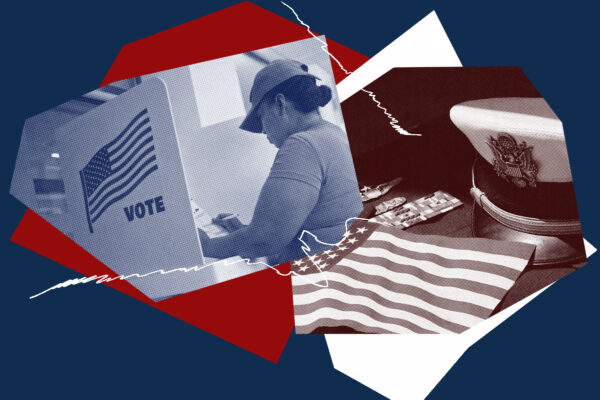
COLUMBIA – Two groups representing military veterans are seeking to keep South Carolina’s primary elections open to all registered voters.
As the new motion to intervene highlights, a large share of military veterans identify as politically independent. Forcing party registration to vote in primaries could lock many independent voters, including veterans, out of a key part of the election process.
Veterans for All Voters and The Chamberlain Network, nonpartisan groups representing some of South Carolina’s 400,000 military veterans, have filed a motion to intervene on the side of the state defendants in the ongoing federal lawsuit South Carolina Republican Party v. Bolchoz. The veterans are represented by the American Civil Liberties Union and the ACLU of South Carolina.
South Carolina’s semi-open primaries are publicly funded and administered by state and county election officials. Under the current system, any registered voter may choose to vote in one major party’s primary or another during an election cycle, but not both.
On July 6, after failing to close primaries via Statehouse legislation, the South Carolina Republican Party sued State Election Commission Chairman Robert Bolchoz and other election officials in federal court. The state GOP, which holds a supermajority in both chambers of the Statehouse, is asking the court to grant the party control over who is allowed to vote in taxpayer-funded primary elections.
“Elections belong to the people,” said Allen Chaney, Legal Director of the American Civil Liberties Union of South Carolina. “Granting private political parties the power to exclude eligible voters from decisive, state-run elections is unfair and undemocratic.”
“Once again, we’re witnessing politicians attempt to choose who gets to participate in our democracy,” said Adriel Cepeda Derieux, Deputy Director for the ACLU's Voting Rights Project. “In South Carolina, where deeply gerrymandered districts means many races are effectively decided in the primary, closing those state-run elections would silence hundreds of thousands of independent voters.”
“My first duty station was in South Carolina, and I called the state home for my first two years on active duty. This case is about whether eligible voters can continue participating in publicly funded primaries without giving up their political independence,” said Alberto Ramos, Chief Executive Officer of Veterans for All Voters. “My brothers and sisters in arms who call South Carolina home today deserve a meaningful voice in the elections that often decide who represents them. South Carolina’s elections belong to South Carolina voters, and we are stepping into court to defend their voice.”
"More than half of post-9/11 veterans do not identify with either party,” said Peter Lucier, Research and Advocacy Manager of The Chamberlain Network. “Those independent veterans deserve a voice in the democracy they served to defend."
Thanks to a pattern of extreme gerrymandering that has made most Congressional and Statehouse districts politically non-competitive in the general election, primary elections are often the decisive contests in South Carolina elections. If the state Republican Party gets its way in court, independent voters who do not register with a party will be robbed of the opportunity to cast a meaningful ballot.
In some races, the primary election is the only chance to vote. In the 2026 election cycle, for example, data from the South Carolina Election Commission identifies 55 elections where the primary is the only contested election. In those races, exclusion from the primary means complete disenfranchisement.
Open primaries are especially important to veterans, who are more likely than the general population to identify as political independents. For example, in a 2024 survey of veterans conducted by Iraq and Afghanistan Veterans of America, 55% of veterans said they did not identify with either the Democratic or Republican party.
The South Carolina Republican Party has tried suing the state to exclude voters from state-run primaries before. In 2011, the state party was a plaintiff in the case Greenville County Republican Party Executive Committee v. South Carolina. But the party eventually abandoned the case after a federal court upheld the facial constitutionality of the state’s primary laws.
In the 2025-2026 legislative session, lawmakers considered bills to amend the semi-open primary system (including H. 3310 and H. 3396, H. 5183, S. 109, and S. 113). Despite the Republican Party holding a supermajority in both chambers of the state legislature, none of these bills passed.
As noted in today’s legal filing, a similar case unfolding in Texas may give South Carolinians a preview of what the South Carolina Republican Party will try next. After proposing legislation to close primaries and then amending party rules, the Republican Party of Texas sued the state in Hunt v. Texas, filed in September 2025. Texas Attorney General Ken Paxton, representing the state as a defendant in the lawsuit, made no defense and instead sided with his own political party attempting to overturn the state’s open primary system.
South Carolina Republicans have followed a similar path so far. South Carolina Attorney General Alan Wilson, who may be called on to defend the State Election Commission in this case, has already appeared at a press conference alongside his party’s leaders aiming to close primaries.
If the attorney general is not interested in defending voters’ rights, then South Carolinians will mount their own defense.
Veterans for All Voters (VAV) is a nonpartisan, veteran-led 501(c)(3) organization founded in 2021. VAV brings together veterans from across the political spectrum to advocate for structural reforms that put voters first, unlock competition, and build a political system accountable to—and worthy of—all Americans. VAV has members throughout South Carolina, including through an active South Carolina chapter.
The Chamberlain Network is a nonprofit organization with a nonpartisan mission to mobilize and empower veterans to protect democracy through organization, education, and community engagement. It is a network of thousands of veterans dedicated to combating polarization in the military.
MEDIA CONTACTS: Paul Bowers, [email protected]; Ella Wiley, [email protected]; Alberto Ramos, [email protected]
Related Issues
Related Content
S.C. Republican Party v. Bolchoz
Stay Informed
Sign up to be the first to hear about how to take action.
By completing this form, I agree to receive occasional emails per the terms of the ACLU’s privacy statement.
By completing this form, I agree to receive occasional emails per the terms of the ACLU’s privacy statement.
