Democracy & Voting Rights

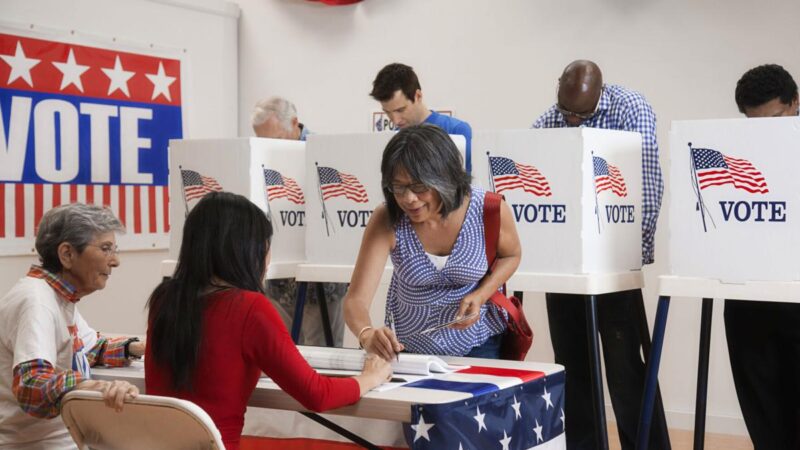
Voting is the cornerstone of our democracy and the fundamental right upon which all our civil liberties rest. The ACLU works to protect and expand Americansʼ freedom to vote.
voting rights issue page

What you need to know

30 days prior

Deadline to register to vote before an election

15-3 days

Early voting period prior to Election Day

11 days prior

Deadline for returning an absentee ballot before Election Day

The ACLU of SC works in the courts, legislature, and the community to uphold the rights of South Carolina voters. We believe that each vote should count equally, voters shouldn’t face undue and unlawful impediments to voting, and communities should have the tools they need to organize, mobilize, and inform local voters.

Looking for Election Day information? Check out our Voting Information Center.

Voting Information Center

In the Courts

The 2021 redistricting process in South Carolina resulted in a congressional map that was blatantly gerrymandered. We joined with our partners to file suit on behalf of the SC Chapter of the NAACP and Taiwan Scott, an individual voter.

In January 2023, the District Court ruled in SC NAACP v Alexander that Congressional District 1 was a racial gerrymander which was a victory for Black voters in particular as the redistricting diluted their political power.

The ruling has been appealed by the state, and we argued our case before the Supreme Court of the United States in October 2023. Catch up on the latest in this landmark case on our Cases page.

In the Legislature

We support the advancement of legislation that restores the voting rights of previously disenfranchised people, increases access to the polls for voters, and ensures elections are free and fair. We oppose legislation that disenfranchises voters, reduces democratic participation, and insulates elected officials from the will of their constituents.

In the Community

We work to provide resources for both individual voters and community groups in order to maximize voter preparedness and participation in elections.

The Latest
Podcast
Placeholder image

Episode 18: Hell of a Year

Public funding of religious schools. A victory for the rights of young voters at the DMV. A green light for partisan gerrymandering. A total abortion ban stopped in its tracks. On this episode, Jace and Paul try to remember all the highlights and low points of 2025. No victory is final, and neither are the losses. Governor Henry McMaster has sent National Guard troops to Washington D.C. again. If you’d like to send a message telling him to bring the troops home for the holidays, visit aclusc.org/guard.
Press Release
"S.C. NAACP and Disabled Voters Challenge Restrictions on Voter Assistance." Background image of "I Voted" stickers in red, white, and blue.

S.C. NAACP and Disabled Voters Challenge Restrictions on Voter Assistance

Disabled voters are suing to challenge South Carolina’s restrictions on voter assistance because these laws violate the federal Voting Rights Act and will impede their ability to vote in the 2026 primaries and general election.
Resource
Placeholder image

Home

Press Release
"A dark day for democracy" on a red banner over a blue background

S.C. Supreme Court green-lights partisan gerrymandered maps

Court Case
Dec 05, 2025

SC NAACP v. Wilson

Disabled voters and the NAACP South Carolina State Conference filed a lawsuit in December 2025 to challenge South Carolina’s restrictions on voter assistance, arguing that these state laws violate the federal Voting Rights Act and will impede their ability to vote in the 2026 primaries and general election. The lawsuit challenges state laws that have made it difficult or impossible for many disabled South Carolinians, including those living in nursing homes and congregate care facilities, to exercise their voting rights. Why this case? We took this case to protect the right to vote. South Carolina law restricts who can provide and receive voting assistance and imposes felony criminal penalties on those who assist in the voting process in violation of South Carolina’s restrictions. The lawsuit challenges those State laws under the Supremacy Clause of the U.S. Constitution, arguing that they violate Section 208 of the Voting Rights Act. Congress added Section 208 to the Voting Rights Act in 1982, finding that allowing disabled voters to choose their preferred assistor was “the only way to assure meaningful voting assistance and to avoid possible intimidation or manipulation of the voter.” It also found that the denial of assistance to low-literacy voters would conflict with the Voting Rights Act’s prohibition on literacy tests, which were long used to disenfranchise Black voters. We are asking a federal court to block enforcement of the following state-level restrictions on voter assistance, citing the Voting Rights Act and the Supremacy Clause of the U.S. Constitution: Who is eligible to receive assistance. South Carolina law prohibits voting assistance “of any kind” except for “those persons who are unable to read or write or who are physically unable or incapacitated from preparing a ballot or voting.” This rule is narrower than the federal Voting Rights Act, which guarantees assistance for all voters with disabilities. The ability of non-family members to assist voters. State law makes it a felony for many disabled voters to rely on anyone other than a member of their “immediate family” to request or return their absentee ballot. Data from the U.S. Election Assistance Commission shows that, among disabled voters who rely on assistance to vote, a majority prefer to rely on a non-family member to assist them. South Carolina voters are only allowed to rely on an “authorized representative” outside their immediate family in specific circumstances, including if they are confined to home or physically incapable of accessing polling places. Who is authorized to assist with voting. The Voting Rights Act guarantees that voters with disabilities may choose anyone to assist them, with only two narrow exceptions related to their employer or union. In contrast, South Carolina law imposes additional restrictions, including the requirement that an authorized representative is registered to vote in South Carolina. How many voters a person can assist. South Carolina law prohibits anyone from requesting more than five absentee ballot applications or returning more than five absentee ballots for others. This rule harms voters at nursing homes and other congregate care facilities, where many residents often seek assistance from a single social worker or other employee, and violates voters’ federal right to rely on an assistor of their choice. The latest Plaintiffs filed the lawsuit in the U.S. District Court for the District of South Carolina on Dec. 5, 2025. The lawsuit seeks a permanent injunction of the State’s unlawful restrictions on voting assistance.
Court Case
Oct 22, 2024

ACLU-SC v. State Election Commission

Court Case
Jul 29, 2024

League of Women Voters of South Carolina v. Alexander

Court Case
Mar 17, 2023

Alexander v. SC NAACP

US District Court ruled in January 2023 that South Carolina’s first congressional district is racially gerrymandered and must be redrawn.