
News & Commentary
Apr 19, 2020
It's Time for South Carolina to Change its Marijuana Laws
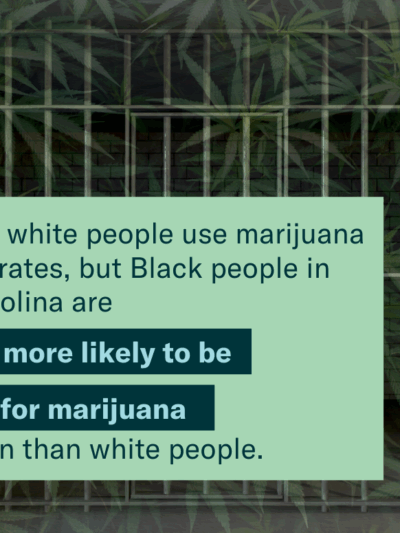
A new ACLU report released today documents how South Carolina’s marijuana laws needlessly ensnare tens of thousands of people -- disproportionately Black people -- in its criminal justice system every year. Sold to the public in the name of public safety, these laws do not make us safe and ruin lives.South Carolina has the second highest arrest rate for marijuana possession in the United States. Every 15 minutes somebody is arrested for possessing marijuana in South Carolina - a substance that is legal or decriminalized for personal use in 26 states and the District of Columbia.South Carolina’s current marijuana laws are a monumental waste of tax dollars. For each of the 34,229 marijuana arrests in 2018, our tax dollars had to pay for a judge, a clerk, law enforcement officers, solicitors, and others to process the case. According to an economic analysis published in 2013, the 16,669 marijuana possession arrests in 2010 cost South Carolina taxpayers nearly $50 million. Between 2010 and 2018 the number of marijuana possession arrests more than doubled, meaning South Carolina taxpayers may be paying closer to $100 million each year to enforce outdated and harmful marijuana possession laws.South Carolina’s marijuana policy is another example of its two-tiered justice system. Two people can be arrested for possessing the same amount of marijuana and face vastly differing punishments based on nothing more than their wealth. This is because access to diversion programs, which can mean the difference between having a criminal conviction and a clean record, often require fees to participate. As a result, those with wealth can pay their way to a clean record, while those without wealth are stuck with a criminal record and all of its collateral harms.And, South Carolina’s marijuana laws, like all aspects of its criminal justice system, are enforced with a staggering racial bias. In 2018 Black people were 3.5 times more likely to be arrested for marijuana possession when compared with whites, despite both groups using marijuana at roughly the same rate. And, this disparity is on the rise, up from 1.8 times more likely to be arrested in 2001 to 2.8 times more likely to be arrested in 2010. The discriminatory enforcement of South Carolina’s marijuana laws means that Black people are more likely to face the immediate harms of a marijuana possession conviction, including potential incarceration, criminal records, the loss of jobs, housing, financial aid eligibility, and child custody.The discriminatory enforcement also compounds the harms that already exist because of the racial wealth divide - a divide born from slavery and maintained though racist policies including regressive taxation, lending and pay discrimination, and unequal education, to name a few. White families in the United States have a median household wealth of $171,000 while Black families median household wealth is just $17,600. Because of this vast economic inequality, the reduced ability to participate in a diversion program and the collateral harms of a marijuana conviction, including its associated fines and fees, disproportionately push Black people into cycles of never ending debt, poverty, and further contact with the criminal justice system.It’s time for our communities to define and advance our vision for what a just, equitable, and safe South Carolina should look like. And, part of this vision must be the legalization of marijuana with racial equity at the foundation of such reform.
Apr 16, 2020
Law Enforcement Can Help Limit the Spread of COVID-19 + Toolkit for Community Action
Covid-19 is spreading in prisons and jails throughout the United States and South Carolina is not immune to this trend.People in prisons and jails are at heightened risk of contracting and dying from COVID-19. They are housed in close quarters, and are often in poor health and physically unable to follow the social distancing guidelines.South Carolina should be doing everything in its power to reduce the number of people currently incarcerated, and thankfully some counties are doing this.Yet, while some judges, solicitors, and law enforcement leaders in South Carolina have recognized the need to reduce the number of incarcerated people in their jurisdictions, Governor McMaster has issued a number of executive orders that could upend this progress.Many of the Executive Orders issued in response to the COVID-19 outbreak include provisions that expand police powers. These expanded powers lack clear definition and have raised serious concerns from vulnerable community members.While individual rights may give way to the greater good during a disease outbreak, the use of any measure that deprives individuals of their liberty must be scientifically supported and proportional. Some provisions of Governor McMaster’s Executive Orders fail to meet this basic test.Many of these provisions ask law enforcement officers to enforce criminal laws without clear guidance and/or proper training. For example:

Dec 07, 2017
Former Officer's Guilty Verdict for Killing Walter Scott Is the Exception, Not the Rule
While the Slager case is a victory, it is not a solution.
Dec 07, 2017
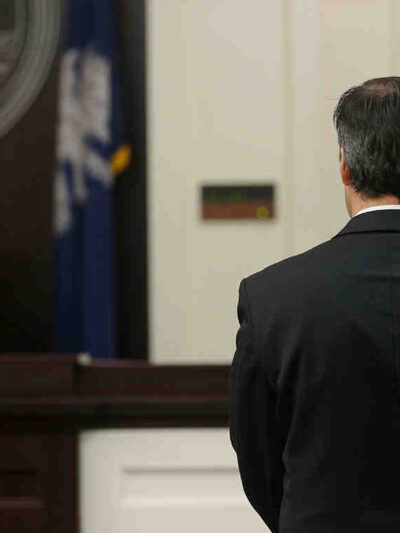
Ex-South Carolina police officer who killed Walter Scott sentenced to 20 years in prison
The sentence tells us that this is taken seriously, and maybe some people won't think it's justice, but looked at in the universe of police shootings, with officers so rarely charged, it is significant.
Jun 22, 2016
Civil rights leaders continue push for federal investigation of North Charleston police
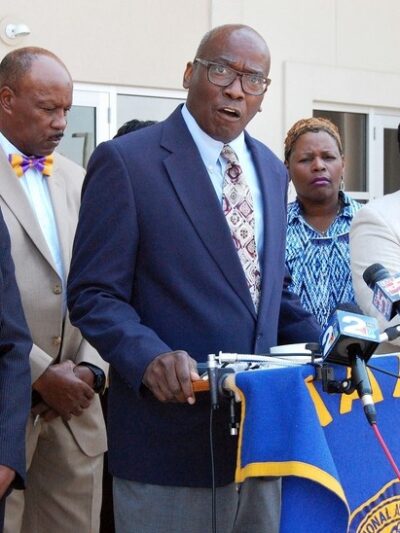
Civil rights leaders continued their call for a federal investigation of the North Charleston Police Department.
Apr 15, 2015
Police Body Cameras Gain Support From Politicians
Equipping officers with body-worn cameras has the support from top politicians, including Gov. Nikki Haley, and state police and legal groups, including the S.C. Law Enforcement Officers' Association, S.C. Sheriffs’ Association and S.C. Bar.

Apr 08, 2015
Filming Cops, Independent Shooting Investigations Affirmed by Senate Panel
Attempting to restore trust in law enforcement after the fatal shooting of Walter Scott by a North Charleston police officer, a state Senate panel on Thursday affirmed the right to record police activity in public and called for independent investigations of police shootings.
Apr 08, 2015
How A Cellphone Video Led To Murder Charges Against A Cop In North Charleston, S.C.
At about 9:30 a.m., North Charleston police officer Michael Slager, who is white, pulled Scott over near the auto store for allegedly driving with a broken tail light. Within minutes, a routine traffic stop had escalated into a pursuit.
Stay Informed
Sign up to be the first to hear about how to take action.
By completing this form, I agree to receive occasional emails per the terms of the ACLU’s privacy statement.
By completing this form, I agree to receive occasional emails per the terms of the ACLU’s privacy statement.
