Introducing Alexandra Bailey!

Hello! My name is Alexandra Bailey (she/her/hers) and I am honored to be joining the ACLU of South Carolina’s team as a National Organizing Specialist focusing on the Charleston County Sheriff Race. I was raised in a city of the haves and have-nots, more commonly known as the District of Columbia, and have been a part of its story; family members with drug addictions, sky-high living costs, insufficient wages, racially motivated treatment, policing, education, and the list goes on. I found my calling to organize through my personal experience with homelessness. My family, like many others, lost nearly everything in the 2008 financial crisis. I was forced to resign a hard-won seat at the University of London and return home to help my family. I was 20 years old, and the bright future I had fought for was suddenly in doubt. Unable to regain financial footing after years of struggle, and in the face of losing the one-bedroom apartment my family shared, a friend took me in as a live-in house/pet sitter in 2013. This turn of events was wholly life changing; it not only offered a solution to a terrifying problem but pivoted the focus of my life. I was now going to spend all my time fighting the social and governmental engines that attack personal dignity, civil liberties, and that create inequity and inaccessibility in our society. It was during this time that I was given the space and safety to further my education through Harvard Distance Learning. I have since gone on to study organizing with Marshall Ganz at the Harvard Kennedy School and guest lecture on organizing theory and practice at Ryerson University.I have come far in my work, but my career began simply. I ran and cooked meals for the Homeless Ministry of First United Methodist Church. During that time, I became painfully aware that the work around poverty and criminal justice reform is often disjointed; it either focuses on immediate needs or trying to change the laws for tomorrow. I found/find this approach flawed. It isn’t holistic, and it doesn’t create a movement; it doesn’t create people power, and it doesn't come from the community. No one issue exists in a silo, and far too commonly these approaches tend to treat those impacted like political pawns, burdens, or paperwork to be processed. I honed my organizing and lobbying techniques, and I got to work! I have worked to gain access to voting for people experiencing homelessness, fought to raise the minimum wage in Cook County, Illinois and beyond, lobbied for the passage HB40 to renew the commitment to abortion access in Illinois, led efforts to pass the Equal Rights Amendment in Illinois, fought racialized policing, elected and held new officials accountable, and more.   From the moment I joined the ACLU of SC, I knew I had found a group of people who believe, as I do, that policy and budgets are moral documents and that we must stand in radical solidarity with those impacted by harmful practices that are antithetical to civil liberties. This incredible organization has launched a campaign for safe and just communities, and their demands live up to that name. Fighting to end the racist war on drugs, the use of 287G agreements that rip apart immigrant families, blatant discrimination against LGBTQ+ persons, racialized policing practices that strip citizens of their First Amendment rights, fighting voter suppression, and reforming a legal system that offers justice based on resources and race. 

Alex headshot

We're Still Fighting for Charleston to Hold its Police Department Accountable for Brutalizing Protestors on May 31

Along with our partners at South Carolina for Criminal Justice Reform (SC4CJR), today we sent a letter expressing concerns about the city of Charleston’s assessment of its response to the uprising in Charleston on May 30 and 31, 2020. In a letter to Mayor Tecklenburg, Charleston Police Chief Reynolds, and Charleston City Council, we provided an analysis of objections to the city’s assessment and reiterated our opposition to mass police violence in and around Marion Square on the afternoon and evening of Sunday, May 31, 2020. 
Black image with white text reading "Campaign for Safe and Just Communities. It's Time to Rethink Public Safety in South Carolina." White ACLU SC logo in bottom right corner.

We Resolved Our Lawsuit Seeking Protections for Incarcerated People During COVID-19, but the Work Isn't Over

Along with our partners Arnold & Porter, today we announced a resolution in Voltz-Loomis, et. al, v. McMaster, et. al., our federal  lawsuit filed on behalf of people incarcerated by the South Carolina Department of Corrections (SCDC). The suit sought immediate relief to protect incarcerated people during COVID-19. Today’s resolution requires SCDC to follow newly adopted procedures to reduce the risk of contracting COVID-19 for all people who are incarcerated in state prisons. As a result of the resolution, SCDC has produced a COVID-19 response policy implementing procedures based on CDC guidelines, including sanitation and medical guidelines. Additional policy provisions include: 
prison

OP-ED: Charleston must build a public safety system for all

This op-ed was published by Charleston City Paper on September 23, 2020. Read the full piece here. 

White background with "People's Budget Coalition" in block letters on the left. On the right is an image of a fist in the air in front of a sunrise. At the bottom, there is a black box with white writing that reads "Refund. Reallocate. Community Control."

Remembering Ruth Bader Ginsburg, 1933–2020

David Cole, ACLU Legal Director With

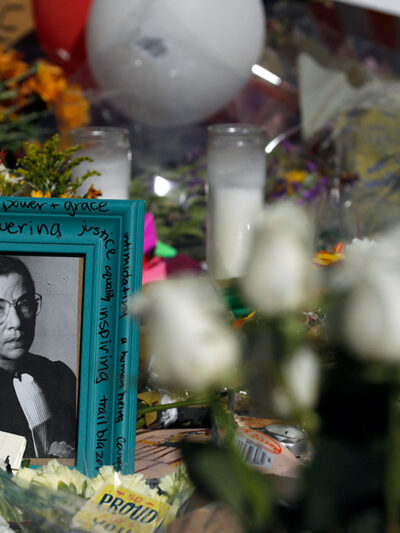
Flowers and a poster with an image of late Associate Justice Ruth Bader Ginsburg are placed outside the Supreme Court in Washington, DC

Ruth Bader Ginsburg’s Fight for Gender Equity was for All of Us

Ria Tabacco Mar, Director, Women’s Rights Project Ruth

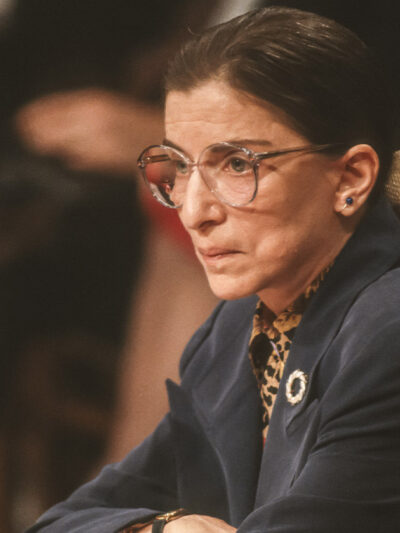
Ruth Bader Ginsburg during confirmation hearings for the US Supreme Court, 1993

A step forward for voting rights in South Carolina

This week, Governor McMaster signed into law legislation that will better protect voters in the November general election during the COVID-19 pandemic. The Governor’s action takes away one of the two hurdles to safe voting during the COVID-19 pandemic, and comes after a federal lawsuit brought by us and the NAACP Legal Defense and Educational Fund.Until this week, eligible voters in South Carolina faced two hurdles to safe voting. First, people who wished to vote absentee faced an “excuse” requirement that failed to provide an accommodation to allow all eligible voters to vote absentee during the pandemic. Second, people who vote absentee are required to have a third-party witness signature on their ballot envelope.Requiring voters to be physically present at their traditional polling places during the COVID-19 outbreak — where they will be congregating and waiting in line with others in order to vote — is contrary to the advice of public health experts. In addition, in the midst of a pandemic, the witness requirement also puts people’s health at risk.Thanks to the legislature’s and Governor McMaster’s actions, eligible South Carolina voters will now be allowed to cite COVID-19 as a valid reason for voting absentee. But, the legislation signed into law does not address the witness requirement, which makes voting from a safe social distance impossible for those who live alone.We are asking the courts to remove this remaining hurdle to safe voting in South Carolina so that no South Carolina voter will need to choose between their health and their vote.Stay tuned. As soon as we have clarity from the court around the witness requirement, we will send out voting rights education materials so that all South Carolinanians will understand the process for voting absentee in November. 

A navy blue background with red, light blue, and bright blue diagonal stripes. Text reads: Protect The Vote 2020. ACLU SC logo is in the bottom right corner.

Another Weekend of Police Violence in Charleston

This past weekend, people protesting in Charleston for racial justice and against police violence were again met with police violence. This has become a disturbing pattern.This recent police escalation comes nearly three months after Charleston area law enforcement departments, including the Charleston Police Department, participated in mass police violence on May 31 in Marion Square, deploying potentially lethal weapons against people peacefully protesting. And, later that night area law enforcement continued their violence against Eastside community members.Our city leaders must not allow this police brutality to continue. Our repeated calls (here and here) for accountability have been met with silence from Charleston Police Chief Reynolds and other local and statewide law enforcement leaders whose officers have repeatedly executed this violence against protestors. It is unconscionable that law enforcement have chosen to respond to community concerns about police violence with silence.It has been over eight months since the publication of the CPD racial bias audit, which found, among other things, that Black community members were 2.8 times more likely to face the use of force from CPD officers. Despite these serious concerns documented in the audit, 2020 CPD data continues to paint a disturbing picture. For example, while Black and white people use marijuana at roughly the same rate, so far this year Black people are approximately 8 times more likely to be arrested for marijuana possession and 10 times more likely to be cited in Charleston. And, these disparities have increased over the 2019 disparity rates.The recent police violence coupled with the continued massive racial disparities in the enforcement of our laws is a contradiction of city leaders’ claims to be invested in racial justice.Over the past several years, the City of Charleston has taken steps to demonstrate to the community a concern for racial justice, including apologizing for its role in slavery, commissioning a racial bias audit of the police department, establishing the “Special Commission on Equity Inclusion and Racial Reconciliation,” and removing the Calhoun monument from Marion Square.Now is the time to follow these gestures with concrete actions to reduce harms enacted on Black people in Charleston. In the birthplace of America’s first police force which was originally established as a slave patrol, this expansion of policing is a direct dismissal of the outcries of Black people who continue to be oppressed by the racist foundation and structure of policing in Charleston.Law enforcement’s perpetuation of these violent attempts to silence their critics serves as an important reminder that our policing system isn't broken — it's working as it was designed. Police actions this past weekend made another great case for why we must drastically reduce the role of policing in our society, especially in communities of color that historically have been over-policed. 

BLM

The U.S. Postal Service Was Never a Business. Stop Treating it Like One.

When the Continental Congress appointed Benjamin Franklin as the first Postmaster General, our nation had not yet been founded. The Bill of Rights would not be drafted for another 16 years. Yet nearly two and a half centuries later, the United States Postal Service’s ability to provide every person in America with a private, affordable, and reliable means to exchange information transformed it from a mail delivery service into a baseline for the exercise of American constitutional rights. Recent news that the Postal Service’s financial condition is being used as a pretext for degrading its service – including allowing mail to go undelivered for days and scaling back the hours of or closing post offices – threatens to degrade that constitutional baseline as well.In an early response to novel coronavirus, Congress allocated $10 billion to help shore up the Postal Service’s finances, but the Treasury Department has held up those funds without explanation. Instead, Postmaster General Louis DeJoy is preparing to make dramatic service cuts, treating the USPS like a private business facing bankruptcy. This should draw universal condemnation.The U.S. Postal Service was never a business. It is an essential government service guaranteed to the American people by the U.S. Constitution and it should be preserved accordingly.To understand how the Postal Service became so central to America’s national identity and the actualization of our constitutional rights, one needs to examine its history.In the earliest days of our nation, Americans were more likely to identify themselves as citizens of their home states than of the United States. For our nation’s first generation, the Postal Service was often the only reminder the U.S. had a federal government at all. As America expanded westward, the Postal Service enabled new states like California, which otherwise would have been isolated by America’s vast Western Territories, to forge its connection with the rest of the country. Ultimately, the roads, rail stations, and rural post offices that were built or subsidized by the Postal Service drove our nation’s physical unification. Even more important were the nationwide communications the Postal Service enabled. Prior to the invention of the telegraph, the absence of a local post office made exchanging ideas with the rest of the country impossible. In America’s early decades, one of the most vital steps taken by newly established towns was to request a post office. Recognizing that receiving information was as critical to our national unity as communicating it, Congress mandated the Postal Service deliver newspapers for free or at a minimal cost. As George Washington wrote in 1788, “I entertain a high idea of the utility of periodical publications … spread[ing] through every city, town and village in America. I consider such easy vehicles of knowledge, more happily calculated than any other, to preserve the liberty, stimulate the industry, and meliorate the morals of an enlightened and free People.” Low-cost newspaper delivery endured until the Congressional Postal Reorganization Act was adopted in 1970.Prior to the 1850s, the delivery of free newspapers and of mail to isolated frontier towns caused the Postal Service to lose money. It likewise strained the Postal Service’s financial resources when, in the mid-19th century, it decided to charge the same price for all first-class letters sent within the U.S. regardless of their destination. These choices were possible then because the Postal Service was not burdened with financial self-sufficiency. Its sole mandate was to enable everyone in America to communicate affordably. In that respect, the Postal Service’s public benefit mission is more akin to the Armed Forces’ than FedEx’s, and no one is suggesting the military should pay its own way or face bankruptcy.Another important piece in the Postal Service’s preservation of civil liberties came in 1877, when the Supreme Court, in Ex Parte Jackson, ruled that “No law of Congress can place in the hands of officials connected with the postal service any authority to invade the secrecy of letters and such sealed packages in the mail.” As a result, the privacy of communications sent via the USPS is constitutionally guaranteed. Good luck getting that with Gmail.The year 2020, perhaps more than any other in American history, illustrates why Postal Service’s centuries-old mission must be upheld.The U.S. Census Bureau, which is presently racing to complete the 2020 census, is relying on the Postal Service for much of its data collection. Government health agencies are depending on the USPS to provide critical COVID-related health information and supplies. Elected officials are using the Postal Service for cost efficient and sometimes free communications with their constituents, including about support programs during the ongoing economic crisis. And as we approach the November election, state and local election boards will be relying more than ever on the USPS to conduct voting by mail, which is critical to guaranteeing the right to vote during the ongoing pandemic. Troubling though it may be, it is impossible not to worry that our unpopular president, who has already called for the delay of his own re-election vote, is seeking to degrade the Postal Service’s ability to timely deliver ballots, particularly in communities that are unlikely to vote for him.Earlier this year President Trump called the Postal Service “a joke,” but there is nothing funny about the steady degradation of an institution that breathes unimaginable life into our constitutional rights. At this critical time, Congress should do everything in its power to ensure the USPS remains vibrant and strong, and that burden falls largely on the Senate Committee on Homeland Security and Government Affairs and its chair, Sen. Ron Johnson, and the House Committee on Oversight and Reform, and its chair, Rep. Carolyn Maloney. Every member of Congress and every American, regardless of political party or philosophy, should be grateful that for 245 years “neither snow, nor rain, nor heat, nor gloom of night stays the [Postal Service’s] couriers from the swift completion of their appointed rounds.” We should ensure that “nor politically-motived cost savings” is added to that list.

Letter carriers load mail trucks for deliveries at a U.S. Postal Service facility.