
News & Commentary
Dec 14, 2020
Longtime ACLU of South Carolina Legal Director Announces Retirement
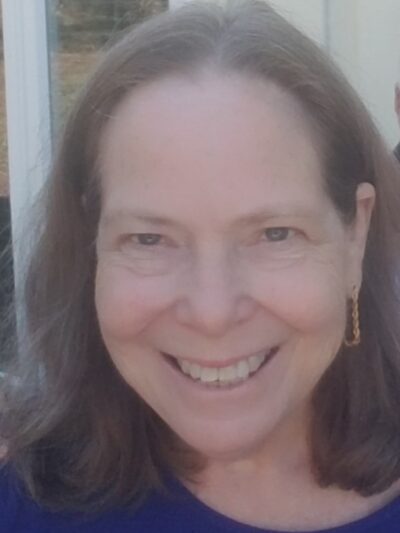
After 12 years as Legal Director of the ACLU of South Carolina and more than 40 years as a civil rights lawyer in South Carolina, Susan Dunn has announced that she will retire effective May 31, 2021.
Dec 10, 2020
The Charleston City Council Must Ensure an Effective Police Body Camera Policy
The Charleston Police Department (CPD) seeks City of Charleston tax dollars to expand its body camera program. The Charleston City Council must ensure strong policies governing the use of body cameras by CPD before providing CPD with additional revenue for its body camera program. Without strong policies, body cameras become just another tool to hide law enforcement abuses. Specifically, the Charleston City Council must ensure CPD’s body camera policy includes the following mandates:
Oct 30, 2020
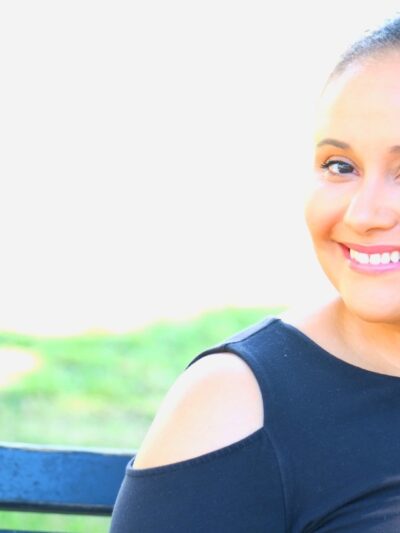
Introducing Alexandra Bailey!
Hello! My name is Alexandra Bailey (she/her/hers) and I am honored to be joining the ACLU of South Carolina’s team as a National Organizing Specialist focusing on the Charleston County Sheriff Race. I was raised in a city of the haves and have-nots, more commonly known as the District of Columbia, and have been a part of its story; family members with drug addictions, sky-high living costs, insufficient wages, racially motivated treatment, policing, education, and the list goes on. I found my calling to organize through my personal experience with homelessness. My family, like many others, lost nearly everything in the 2008 financial crisis. I was forced to resign a hard-won seat at the University of London and return home to help my family. I was 20 years old, and the bright future I had fought for was suddenly in doubt. Unable to regain financial footing after years of struggle, and in the face of losing the one-bedroom apartment my family shared, a friend took me in as a live-in house/pet sitter in 2013. This turn of events was wholly life changing; it not only offered a solution to a terrifying problem but pivoted the focus of my life. I was now going to spend all my time fighting the social and governmental engines that attack personal dignity, civil liberties, and that create inequity and inaccessibility in our society. It was during this time that I was given the space and safety to further my education through Harvard Distance Learning. I have since gone on to study organizing with Marshall Ganz at the Harvard Kennedy School and guest lecture on organizing theory and practice at Ryerson University.I have come far in my work, but my career began simply. I ran and cooked meals for the Homeless Ministry of First United Methodist Church. During that time, I became painfully aware that the work around poverty and criminal justice reform is often disjointed; it either focuses on immediate needs or trying to change the laws for tomorrow. I found/find this approach flawed. It isn’t holistic, and it doesn’t create a movement; it doesn’t create people power, and it doesn't come from the community. No one issue exists in a silo, and far too commonly these approaches tend to treat those impacted like political pawns, burdens, or paperwork to be processed. I honed my organizing and lobbying techniques, and I got to work! I have worked to gain access to voting for people experiencing homelessness, fought to raise the minimum wage in Cook County, Illinois and beyond, lobbied for the passage HB40 to renew the commitment to abortion access in Illinois, led efforts to pass the Equal Rights Amendment in Illinois, fought racialized policing, elected and held new officials accountable, and more. From the moment I joined the ACLU of SC, I knew I had found a group of people who believe, as I do, that policy and budgets are moral documents and that we must stand in radical solidarity with those impacted by harmful practices that are antithetical to civil liberties. This incredible organization has launched a campaign for safe and just communities, and their demands live up to that name. Fighting to end the racist war on drugs, the use of 287G agreements that rip apart immigrant families, blatant discrimination against LGBTQ+ persons, racialized policing practices that strip citizens of their First Amendment rights, fighting voter suppression, and reforming a legal system that offers justice based on resources and race.
Oct 22, 2020
We're Still Fighting for Charleston to Hold its Police Department Accountable for Brutalizing Protestors on May 31
Along with our partners at South Carolina for Criminal Justice Reform (SC4CJR), today we sent a letter expressing concerns about the city of Charleston’s assessment of its response to the uprising in Charleston on May 30 and 31, 2020. In a letter to Mayor Tecklenburg, Charleston Police Chief Reynolds, and Charleston City Council, we provided an analysis of objections to the city’s assessment and reiterated our opposition to mass police violence in and around Marion Square on the afternoon and evening of Sunday, May 31, 2020.
Oct 14, 2020
We Resolved Our Lawsuit Seeking Protections for Incarcerated People During COVID-19, but the Work Isn't Over
Along with our partners Arnold & Porter, today we announced a resolution in Voltz-Loomis, et. al, v. McMaster, et. al., our federal lawsuit filed on behalf of people incarcerated by the South Carolina Department of Corrections (SCDC). The suit sought immediate relief to protect incarcerated people during COVID-19. Today’s resolution requires SCDC to follow newly adopted procedures to reduce the risk of contracting COVID-19 for all people who are incarcerated in state prisons. As a result of the resolution, SCDC has produced a COVID-19 response policy implementing procedures based on CDC guidelines, including sanitation and medical guidelines. Additional policy provisions include:

Sep 23, 2020
OP-ED: Charleston must build a public safety system for all
This op-ed was published by Charleston City Paper on September 23, 2020. Read the full piece here.
Sep 22, 2020
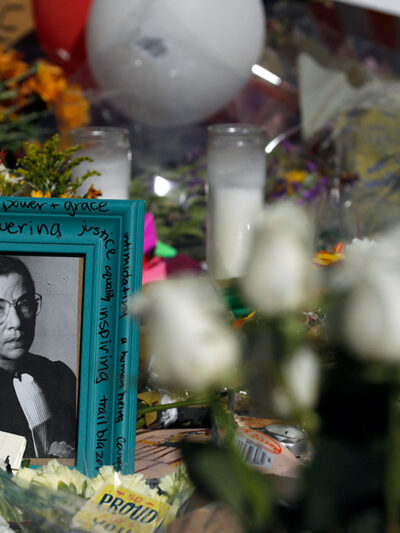
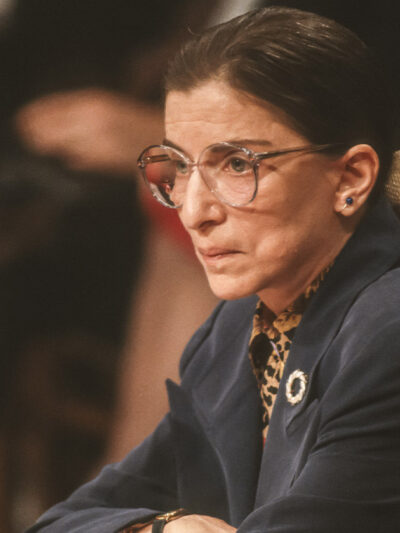
Ruth Bader Ginsburg’s Fight for Gender Equity was for All of Us
Ria Tabacco Mar, Director, Women’s Rights Project
Ruth
Sep 18, 2020
A step forward for voting rights in South Carolina
This week, Governor McMaster signed into law legislation that will better protect voters in the November general election during the COVID-19 pandemic. The Governor’s action takes away one of the two hurdles to safe voting during the COVID-19 pandemic, and comes after a federal lawsuit brought by us and the NAACP Legal Defense and Educational Fund.Until this week, eligible voters in South Carolina faced two hurdles to safe voting. First, people who wished to vote absentee faced an “excuse” requirement that failed to provide an accommodation to allow all eligible voters to vote absentee during the pandemic. Second, people who vote absentee are required to have a third-party witness signature on their ballot envelope.Requiring voters to be physically present at their traditional polling places during the COVID-19 outbreak — where they will be congregating and waiting in line with others in order to vote — is contrary to the advice of public health experts. In addition, in the midst of a pandemic, the witness requirement also puts people’s health at risk.Thanks to the legislature’s and Governor McMaster’s actions, eligible South Carolina voters will now be allowed to cite COVID-19 as a valid reason for voting absentee. But, the legislation signed into law does not address the witness requirement, which makes voting from a safe social distance impossible for those who live alone.We are asking the courts to remove this remaining hurdle to safe voting in South Carolina so that no South Carolina voter will need to choose between their health and their vote.Stay tuned. As soon as we have clarity from the court around the witness requirement, we will send out voting rights education materials so that all South Carolinanians will understand the process for voting absentee in November.
Stay Informed
Sign up to be the first to hear about how to take action.
By completing this form, I agree to receive occasional emails per the terms of the ACLU’s privacy statement.
By completing this form, I agree to receive occasional emails per the terms of the ACLU’s privacy statement.
