
News & Commentary
Sep 20, 2023
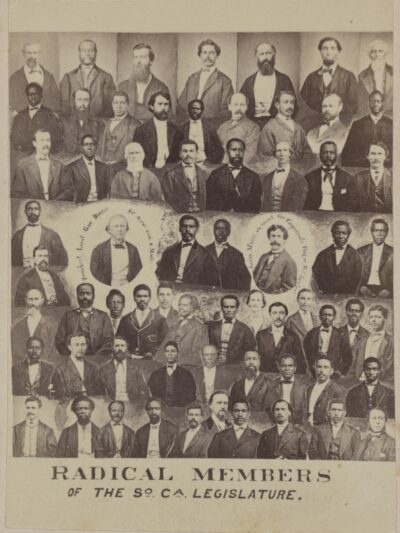
These Reconstruction ‘radicals’ secured our rights
Black lawmakers in 1868 guaranteed all South Carolinians a remedy at law. We’re proud to defend that right today.
By Paul Bowers
Aug 29, 2023
We're still fighting for fair electoral maps in South Carolina
An update on our redistricting case, South Carolina NAACP v. Alexander
By Paul Bowers
Jan 10, 2023
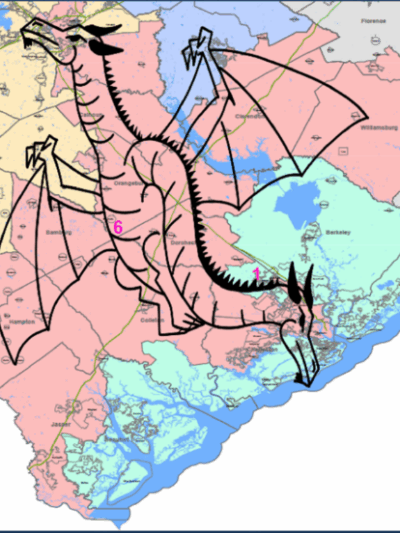
Huge Victory! Court Rules Congressional District One Is a Racial Gerrymander
US District Court ruled that South Carolina’s first congressional district is racially gerrymandered and must be redrawn.
Jun 04, 2022
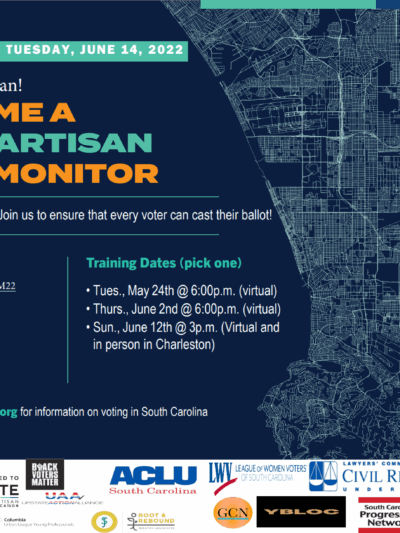
Make a Difference: Become a Poll Monitor
The South Carolina primary elections are here! Early voting started on Tuesday and continues to Friday, June 10 at 5 p.m. Election Day is Tuesday, June 14.
Mar 11, 2022
Help Empower Women at the Ballot Box: Women's History Month and Early Voting in South Carolina
Recently, the South Carolina House unanimously passed a bill that would allow two weeks of early voting. If this bill passes, it would expand the opportunity for working people to be able to vote, and allow South Carolinians to vote at the polls on Saturday.

Sep 18, 2020
A step forward for voting rights in South Carolina
This week, Governor McMaster signed into law legislation that will better protect voters in the November general election during the COVID-19 pandemic. The Governor’s action takes away one of the two hurdles to safe voting during the COVID-19 pandemic, and comes after a federal lawsuit brought by us and the NAACP Legal Defense and Educational Fund.Until this week, eligible voters in South Carolina faced two hurdles to safe voting. First, people who wished to vote absentee faced an “excuse” requirement that failed to provide an accommodation to allow all eligible voters to vote absentee during the pandemic. Second, people who vote absentee are required to have a third-party witness signature on their ballot envelope.Requiring voters to be physically present at their traditional polling places during the COVID-19 outbreak — where they will be congregating and waiting in line with others in order to vote — is contrary to the advice of public health experts. In addition, in the midst of a pandemic, the witness requirement also puts people’s health at risk.Thanks to the legislature’s and Governor McMaster’s actions, eligible South Carolina voters will now be allowed to cite COVID-19 as a valid reason for voting absentee. But, the legislation signed into law does not address the witness requirement, which makes voting from a safe social distance impossible for those who live alone.We are asking the courts to remove this remaining hurdle to safe voting in South Carolina so that no South Carolina voter will need to choose between their health and their vote.Stay tuned. As soon as we have clarity from the court around the witness requirement, we will send out voting rights education materials so that all South Carolinanians will understand the process for voting absentee in November.
Jun 01, 2020
There is still time to vote by mail in South Carolina's primaries
No one should have to choose between their health and their right to vote. Earlier this month, the South Carolina General Assembly passed legislation allowing all registered voters to vote by mail in the upcoming June 9 primary election. On Monday, a federal court ruled favorably in our lawsuit, blocking a requirement that forced people who vote absentee to obtain a witness signature.

May 20, 2020
"We The People" Means ALL of Us: Our Blueprint for COVID-19 Relief
COVID-19 has illuminated our failures as a society. To urge decision makers to minimize the harms made worse by this pandemic, today we released a blueprint for COVID-19 relief in South Carolina. The blueprint calls on our leaders to ensure the burdens of the pandemic do not unfairly fall on South Carolina’s most vulnerable communities and that all responses are rooted in science and public health and are no more intrusive on civil liberties than necessary. To ensure a COVID-19 response that protects all people, South Carolina must:

Apr 23, 2020
We're Asking the Courts to Ensure Access to the Vote During COVID-19
On April 22, we and our partners at the nationwide ACLU and NAACP Legal Defense and Educational Fund filed a federal lawsuit over South Carolina’s failure to take action to ensure all eligible voters can vote by mail during the COVID-19 pandemic — even for our fast-approaching June 9 statewide primary elections.We are challenging a state requirement that forces people who vote absentee to have a third-party witness signature on their ballot envelope, as well as an “excuse” requirement that fails to provide an accommodation to allow all eligible voters to vote absentee during the pandemic.Even if voters are allowed to vote absentee “because of injury or illness” that keeps them at home, election officials have rejected the view that this currently “include[s] self-isolating due to a pandemic.”Requiring voters to be physically present at their traditional polling places during the COVID-19 outbreak — where they will be congregating and waiting in line with others in order to vote — is contrary to the advice of public health experts. In addition, in the midst of a pandemic, the witness requirement also puts people’s health at risk.Our lawsuit asks the court to block the state from enforcing the requirements while COVID-19 transmission is occurring; issue guidance instructing local election officials to count otherwise validly cast absentee ballots that are missing a witness signature for South Carolina’s primary and general elections in 2020; and conduct a public information campaign informing voters about the elimination of the witness and excuse requirements at this time.Inevitably, the COVID-19 pandemic will result in voter suppression in 2020 elections unless we put preventative measures into place now. Without action from the courts, South Carolina’s June primaries will force people to choose between their health and their right to vote, a decision no one should have to make.
Stay Informed
Sign up to be the first to hear about how to take action.
By completing this form, I agree to receive occasional emails per the terms of the ACLU’s privacy statement.
By completing this form, I agree to receive occasional emails per the terms of the ACLU’s privacy statement.
