
News & Commentary
Mar 10, 2020
COVID-19 Recommendations for Prison and Jail Officials
People involved in the criminal legal system face heightened risk of COVID-19 infection. We urge South Carolina prison and jail officials to immediately develop evidence-based and proactive plans for the prevention and management of COVID-19 in their facilities.

Mar 07, 2020
South Carolina Must Stop Shackling Pregnant People Who Are Incarcerated
Last week, South Carolina Senators voted unanimously to advance legislation seeking to limit the types of restraints used on pregnant people who are incarcerated and virtually abolish the practice of shackling people during labor, childbirth, and postpartum recovery. The legislation will return to the House of Representatives with a new amendment which would further expand protections for pregnant incarcerated people.If passed as amended, South Carolina’s prisons, jails, and work camps would be required to provide access to adequate nutrition and a bottom bunk and would be prohibited from holding pregnant incarcerated people in solitary confinement under most circumstances. The amendment also requires prisons, jails, and work camps to ensure the availability of menstrual hygiene products for all people under their care with an active menstrual cycle and mandates that these products be made available at no cost to those who cannot afford to pay. Additionally, the Department of Corrections would be required to authorize weekly contact visits between incarcerated people with low or minimum-security classifications and their children.The practice of shackling incarcerated people while they are pregnant, in labor, giving birth, and recovering from birth has been opposed by the nation’s leading experts in maternal, fetal, and child healthcare, including the American Congress of Obstetricians and Gynecologists (ACOG), the American Medical Association, and the American Public Health Association. Additionally, the Federal Bureau of Prisons, U.S. Immigration and Customs Enforcement and the American Correctional Association have all adopted policies to limit the use of shackles on pregnant people who are incarcerated. Across South Carolina, criminal justice and reproductive health advocates have come together to support this legislation. The organizations include the ACLU of South Carolina; ANSWER Coalition; the Association of Women’s Health, Obstetric, and Neonatal Nurses (AWHONN); the South Carolina Perinatal Association; Justice Carolina; and the Women’s Rights and Empowerment Network.We are thrilled to be one step closer to ending the cruel and inhumane practice of shackling incarcerated people during labor, childbirth, and postpartum recovery and we urge the South Carolina House of Representatives to pass this legislation as amended and greatly increase the likelihood of positive outcomes for parents and their newborn children.

Feb 28, 2019
South Carolina's Prison Profile
The Prison Policy Initiative has done an analysis of every state's prison system to determine where each state stands compared to the world. South Carolina's position? Shocking.
Aug 29, 2018
SC officials on alert after deadly prison riot inspires inmate strike in 17 states
The deadline prison riot at Lee Correctional prompted the strike.
Dec 07, 2017
Former Officer's Guilty Verdict for Killing Walter Scott Is the Exception, Not the Rule
While the Slager case is a victory, it is not a solution.
Dec 07, 2017
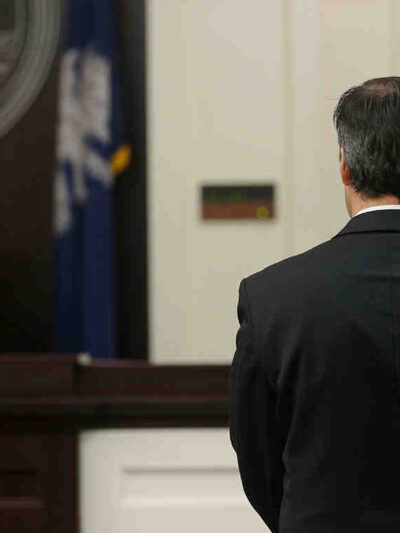
Ex-South Carolina police officer who killed Walter Scott sentenced to 20 years in prison
The sentence tells us that this is taken seriously, and maybe some people won't think it's justice, but looked at in the universe of police shootings, with officers so rarely charged, it is significant.
Jun 15, 2017
Less jail for unpaid fines
Laws exist for a reason. So do punishments for breaking the law. And those punishments should apply fairly to everyone — rich or poor.
Stay Informed
Sign up to be the first to hear about how to take action.
By completing this form, I agree to receive occasional emails per the terms of the ACLU’s privacy statement.
By completing this form, I agree to receive occasional emails per the terms of the ACLU’s privacy statement.
