
News & Commentary
Sep 20, 2023
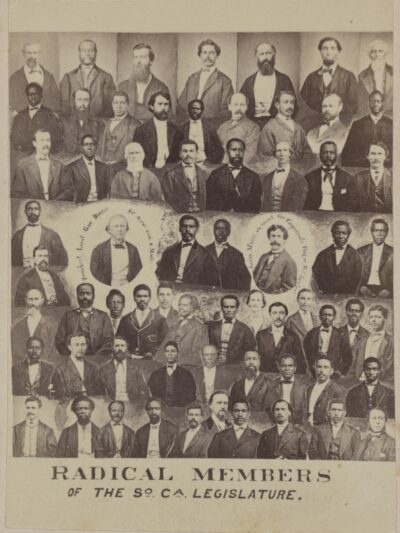
These Reconstruction ‘radicals’ secured our rights
Black lawmakers in 1868 guaranteed all South Carolinians a remedy at law. We’re proud to defend that right today.
By Paul Bowers
Aug 08, 2023
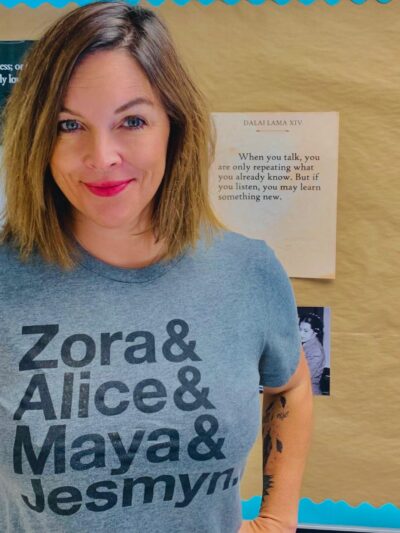
Meet Mary Wood, a teacher resisting censorship
As censorship and harassment spread across South Carolina, teachers are finding allies in their communities.
By Paul Bowers
May 23, 2022
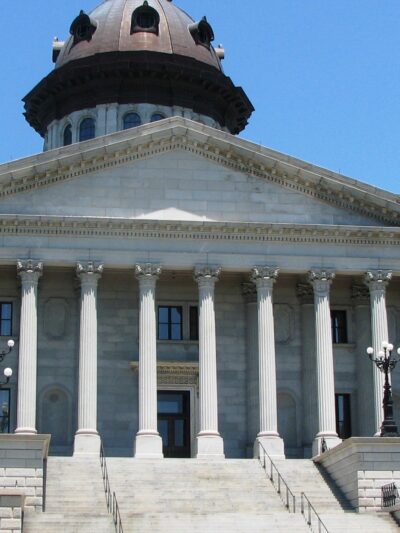
Legislative Session Wrap-Up
The South Carolina General Assembly has finished its regular session. Along with partners, we fought dozens of bills designed to undermine the constitutional rights of South Carolinians.
Apr 21, 2022
Keep Censorship Out of Our Classrooms
House Bill 5183 is a censorship bill designed to censor the speech of students and educators in the classroom.
Jul 29, 2020
We're still waiting for the Charleston Police Department to hold its officers accountable for violence against protestors
Today we sent a second letter to the City of Charleston reiterating objections to mass police violence in and around Marion Square by the Charleston Police Department (CPD) on the afternoon and evening of Sunday, May 31, 2020. This action follows an initial letter we sent on June 2 calling on local law enforcement leaders to publicly explain their rationale for responding to non-violent protests against police violence with more police violence. The June 2 letter also issued a list of demands including a public apology from law enforcement leaders as well as outlined plans for holding officers accountable and guaranteeing people’s right to protest in Charleston.On June 22, nearly 60 days since this police brutality, the city finally responded. In their letter, they bypassed our questions and demands and defended law enforcement’s actions on May 31.The CPD has attempted to justify its actions on May 31 by pointing to events that happened during the previous evening. But, the CPD’s own policy on use of force clearly states that force is only justified in times of imminent danger. A past event, even by their own standard, is not an acceptable reason for Charleston police officers to carry out mass violence and deploy potentially lethal weapons against people peacefully exercising their Constitutional rights.In addition to the use of force policy outlined in the CPD’s General Administrative Order, officers also violated the department’s rules on the use of chemical agents, which are only deemed necessary “where a serious danger to life and property exists and other methods of apprehension would be ineffective or more dangerous.”Our letter also raises concerns about excessive and unprovoked violence carried out by police on residents of Charleston’s Eastside neighborhood on the evening of May 31. The city and Charleston Police Chief Reynolds have dismissed concerns from Eastside residents and their allies about CPD’s violent actions in their neighborhood. This excessive, unprovoked police action is a part of a pattern against Black Eastside community members that cannot be ignored. Residents have called for services that will improve safety and, instead, CPD is using city resources to increase patrols. We know what happens when police go down this road, it’s not new. All this will do is further criminalize Black and poor people.
Jul 03, 2020
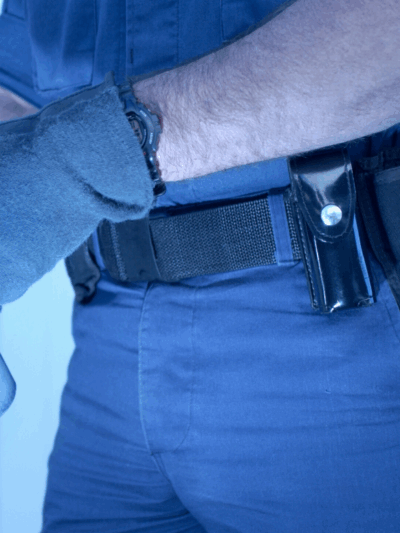
More Brutality is Not An Acceptable Response to Protests Against Police Brutality
On Sunday, May 31 we watched as multiple police departments converged in Marion Square to break up peaceful protests calling for racial justice and an end to police brutality against Black people. Law enforcement’s response to a non-violent protest about police violence was pure and unnecessary brutality.The police violence we witnessed first-hand matches the videos we’ve seen of police violence that occurred later that evening in Charleston’s Eastside community, where officers carried on their brutality against Black community members.The weapons that law enforcement used to indiscriminately brutalize people in Marion Square and the Eastside can and have killed people and caused other long-term health consequences. Additionally, experts have clearly warned that the use of tear gas threatens to worsen the spread of COVID-19, which we know is disproportionately impacting Black and Brown communities. This excessive, unprovoked police action is a part of a pattern that cannot be ignored.We are united in solidarity with Charleston’s Eastside and all of South Carolina’s communities who face police violence. Calls for accountability have been met with silence from Charleston Police Chief Reynolds and other local and statewide law enforcement leaders whose officers executed this pattern of violence. It is unconscionable that law enforcement have chosen to respond to community concerns about police violence with silence.Police brutality has a long history in America. Throughout history, our laws and political leaders have protected the oppressor over the oppressed — from punishing abolitionists instead of slave owners, to punishing opponents of mass incarceration and police violence instead of those who perpetuate it.The police violence witnessed by Eastside community members was not an anomaly. Our policing system isn't broken — it's working as it was designed. Police have been, and continue to be, a key mechanism for enforcing many of these racist and exploitative policies. Coming to terms with that means recognizing that the system has to be completely dismantled so that Black people can finally live freely and without fear in this country.Law enforcement actions on May 31 made another great case for why we must drastically reduce policing in our society, especially in communities of color that historically have been over-policed. It's time for Charleston’s political leaders to listen to and learn from those directly harmed by police violence and to finally build a Charleston that is safe and just for all.
Jun 09, 2020
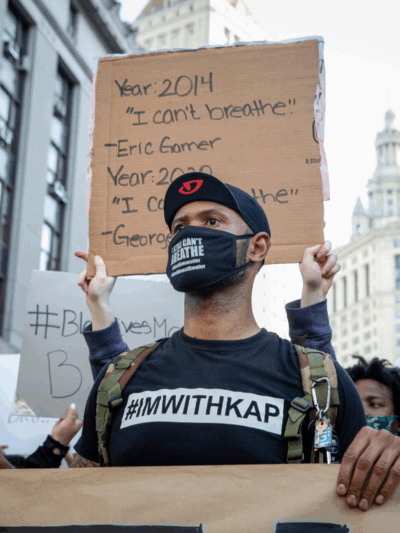
ACLU of South Carolina Joins Request for UN Investigation of the Escalating Situation of Police Violence and Repression of Protests in South Carolina and across the United States
Yesterday, we joined the families of George Floyd, Breonna Taylor, Michael Brown, and Philando Castile, and over 600 human rights groups in demanding the United Nations Human Rights Council swiftly convene a special session to investigate the escalating situation of police violence and repression of protests in the United States.As we wrote last week, multiple South Carolina law enforcement agencies have responded to non-violent protests about police violence with more violence. We have observed police officers actively pursue peaceful protestors, making arrests and firing projectiles and chemicals.

Jun 06, 2020
Police Violence, Curfews, and the Silencing of Protest (against Police Violence) in South Carolina
Since the Minneapolis Police Department murdered George Floyd on May 25, law enforcement in South Carolina and across the nation have responded to non-violent protests against police violence with more violence.
Jun 04, 2020
OP ED: Safe and just communities require fewer police and more services
This op ed was published by the Charleston City Paper on June 4, 2020. On Sunday afternoon, multiple police departments converged in Charleston, S.C. to break up peaceful protests calling for racial justice and an end to police brutality against black people. Their actions made another great case for why we must drastically reduce policing in our society, especially in communities of color that historically have been over-policed. Their response to a non-violent protest about police violence was pure and unnecessary brutality. It was both unbelievable and predictable. Read the full piece here.
Stay Informed
Sign up to be the first to hear about how to take action.
By completing this form, I agree to receive occasional emails per the terms of the ACLU’s privacy statement.
By completing this form, I agree to receive occasional emails per the terms of the ACLU’s privacy statement.
