
Forced ICE Collaboration Bill unanimously rejected by public in Feb. 17 hearing
February 17, 2026 5:30 pm

COLUMBIA – During a two-hour public hearing on Tuesday, Feb. 17, every public testifier voiced strong opposition to a bill that would force local law enforcement agencies to sign collaboration agreements with U.S. Immigration & Customs Enforcement (ICE).
House Bill 4764 would require every agency that operates a correctional facility to enter a written collaboration agreement with ICE through its 287(g) program. The House AI, Cybersecurity & Special Laws Subcommittee heard testimony Tuesday afternoon from 22 South Carolinians who signed up to speak. Every speaker opposed H. 4764. Additionally, at least 125 South Carolinians have sent written messages to their lawmakers opposing the bill using the form at aclusc.org/iceout
The subcommittee did not take a vote on Tuesday. Rep. Travis Moore (R-Spartanburg), who chairs the subcommittee and sponsored the bill, said the subcommittee will vote at a subsequent meeting. No meeting date has been announced yet.
The track record of ICE collaboration agreements is clear: They lead to increased racial profiling and decreased public trust in law enforcement, with no improvement in public safety.
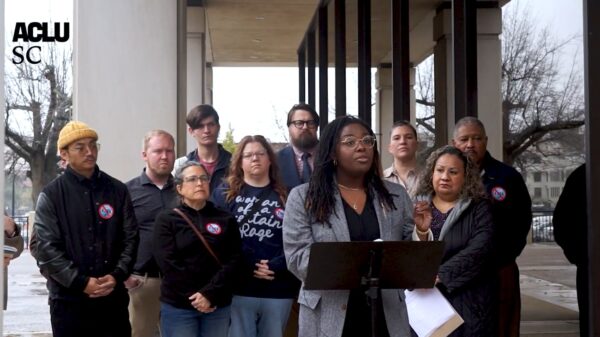
During public comments, ACLU of South Carolina Advocacy Director Courtney Thomas highlighted problems with the bill including the impact on school attendance:
“I’m also here to tell you that there is a cost to these agreements … 287(g) and other collaboration agreements with Immigration and Customs Enforcement spend time, money, trust, and local resources — all to do the work of the federal government. Our students pay the cost.”
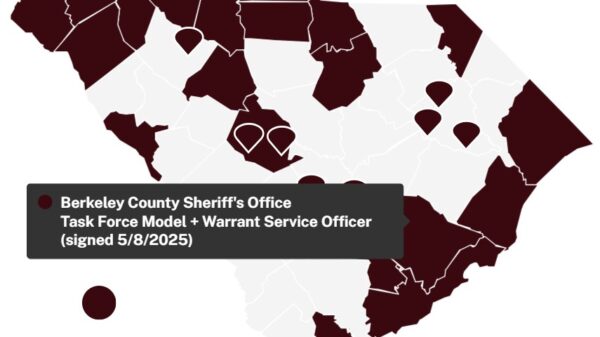
A 2021 study in North Carolina found that when local police enter collaboration agreements with ICE, school engagement decreases and chronic absenteeism increases. In South Carolina as these agreements grew tenfold in 2025, school districts noted plummeting attendance rates by students from Latine communities at the start of the 2025-2026 school year.
Speakers highlighted numerous concerns with H. 4764 including:
- How ICE collaboration erodes public trust in police. Studies have shown that, in places where local law enforcement cooperated with ICE, members of immigrant communities who were victims of crimes became less willing to report those crimes.
- Fear of violence and civil rights violations by ICE. Multiple speakers commented that while they trust their local police chiefs and sheriffs, they do not trust ICE to act responsibly or refrain from violence.
- Legal liability. A representative of the Municipal Association of South Carolina expressed concern that towns and cities would face civil rights lawsuits after collaborating with ICE at the local level.
- The fiscal burden that ICE agreements place on local governments. A 2019 study by the North Carolina Justice Center found that the cumulative cost to North Carolina taxpayers of collaboration with ICE over a decade was at least $81.7 million.
Archived video of the House Judiciary Artificial Intelligence, Cybersecurity, & Special Laws Subcommittee hearing on H. 4764 is available on the Statehouse website. To learn more about ICE collaboration agreements, see our informational page here:
Related Content
As Forced ICE Collaboration Bill advances, ACLU reports on damage to public trust and civil rights
Stay Informed
Sign up to be the first to hear about how to take action.
By completing this form, I agree to receive occasional emails per the terms of the ACLU’s privacy statement.
By completing this form, I agree to receive occasional emails per the terms of the ACLU’s privacy statement.
