It’s official: The South Carolina General Assembly is working overtime to rig our election maps. Want to do something about it? You can start by letting your state lawmakers know what you think.
Regular session ended on Thursday, May 14, at 5 p.m. That should have been the end of it.
But Governor Henry McMaster, who had said 10 days earlier that he would not call a special session to discuss redistricting, apparently had a change of heart. Ignoring the calls of his constituents and the rally taking place on the steps of the Statehouse, he ordered the legislature to come back for a special session.
And so, at mid-decade, with overseas ballots already cast for June 9 Congressional primaries, our state lawmakers will spend much of this week figuring out how quickly they can jam a rigged map through their own approval process. They are cheating and subverting democracy in broad daylight.
We will be working with allies and partners to keep the pressure on at the Statehouse all week. Keep an eye on our social media accounts for announcements about events, rallies, and opportunities to show up around the state. (You can follow us on Facebook, Instagram, Bluesky, Threads, and Twitter.)
As mentioned at the top, you can also help by writing to your state representative and senator urging them to carefully consider what they are about to do.
Why is this happening?
It’s only been two-and-a-half weeks since the U.S. Supreme Court gutted a key provision of the Voting Rights Act in Louisiana v. Callais, weakening a protection against racial discrimination in voting. Almost immediately, former states of the Confederacy and Jim Crow entered a race to redraw Congressional maps.
South Carolina lawmakers have joined that race under immense public pressure from President Donald Trump. They have said that their goal is to maximize the chances of Republican victory in all seven of the state’s Congressional districts. Unlike in the usual redistricting process, which takes extensive public input and is based on new Census data, lawmakers are redrawing the map at mid-decade with no consideration of public input.
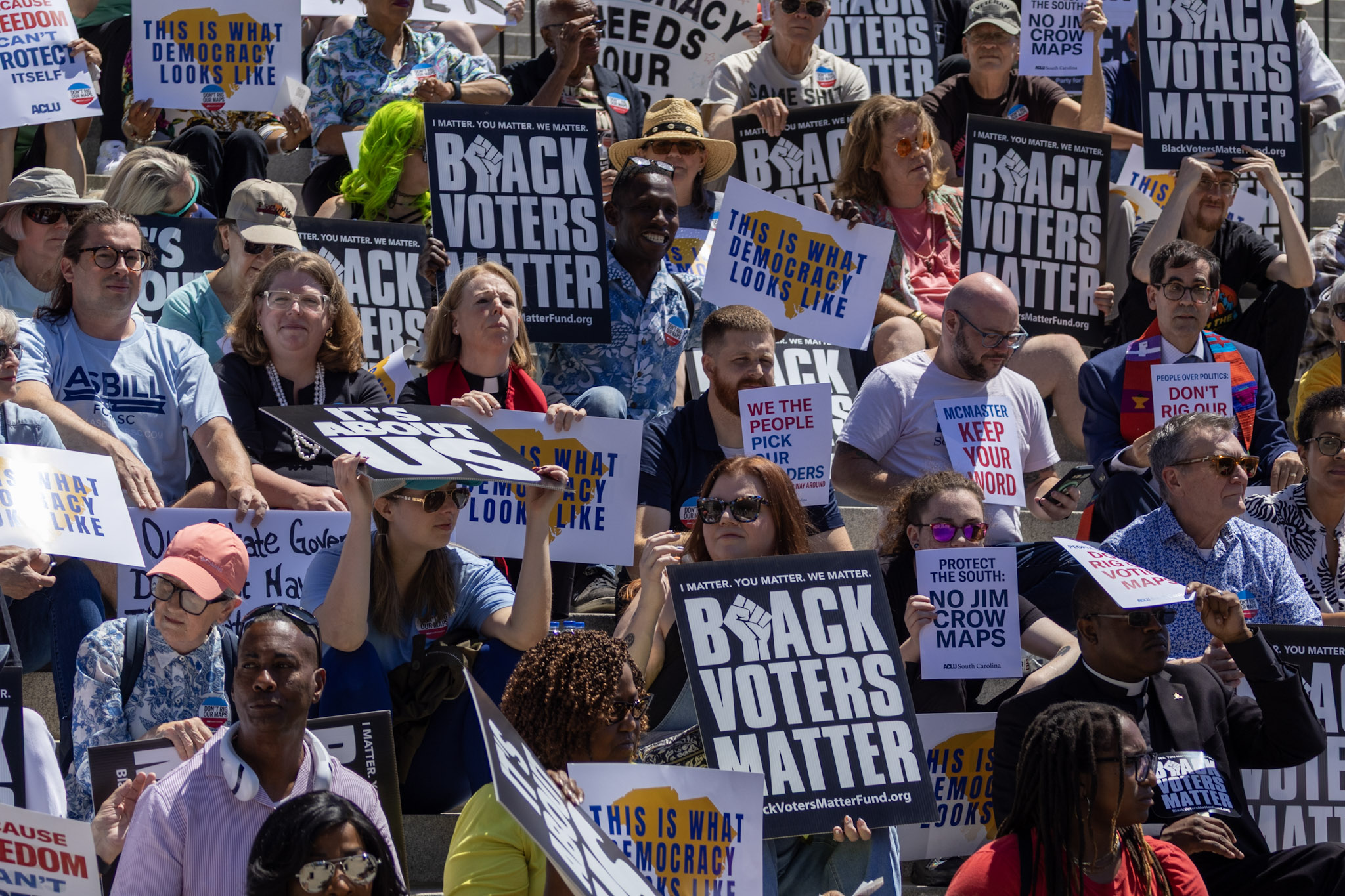
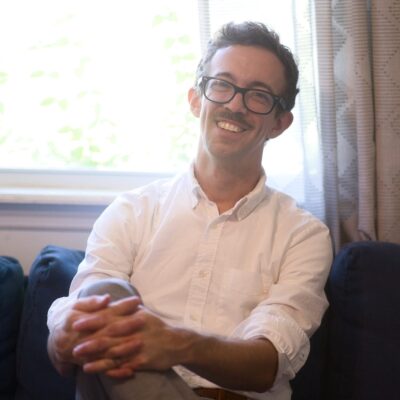
Rally Against Redistricting, May 14, 2026
Photo by A Hanus
The draft map we have seen would radically re-align districts. Richland County would be split three ways, with residents of the northwestern parts of the county suddenly sharing a district with far-away Oconee County. York County would be split between Rock Hill and Fort Mill. Some Charleston County voters would find themselves in a district with Myrtle Beach.
This map is apparently the brainchild of one Adam Kincaid of the National Republican Redistricting Trust, whom Democracy Docket has called the “hidden hand” behind similar power grabs in states like Texas. Mr. Kincaid graced a subcommittee hearing with his presence via a Zoom call for just a few minutes on May 12, took no questions, and logged off promptly at 10 a.m. for another appointment.
How would this affect voters?
The effects of changing maps during an ongoing primary would be chaotic, expensive, and corrosive to public faith in elections. Depending on how maps get redrawn, at least one-third of voters would likely find themselves voting in a new district. Candidates who have been campaigning would find themselves or their campaign turf suddenly drawn into a different district.
The head of the State Election Commission recently estimated that scheduling a second primary in August would cost taxpayers upward of $2 million — not to mention the cost of litigation to defend newly rigged maps.
State lawmakers’ shameless actions over the past two weeks have violated a basic principle of life in a representative democracy: Voters should choose their leaders, not the other way around. When politicians get to choose their fiefdoms, the voters lose.
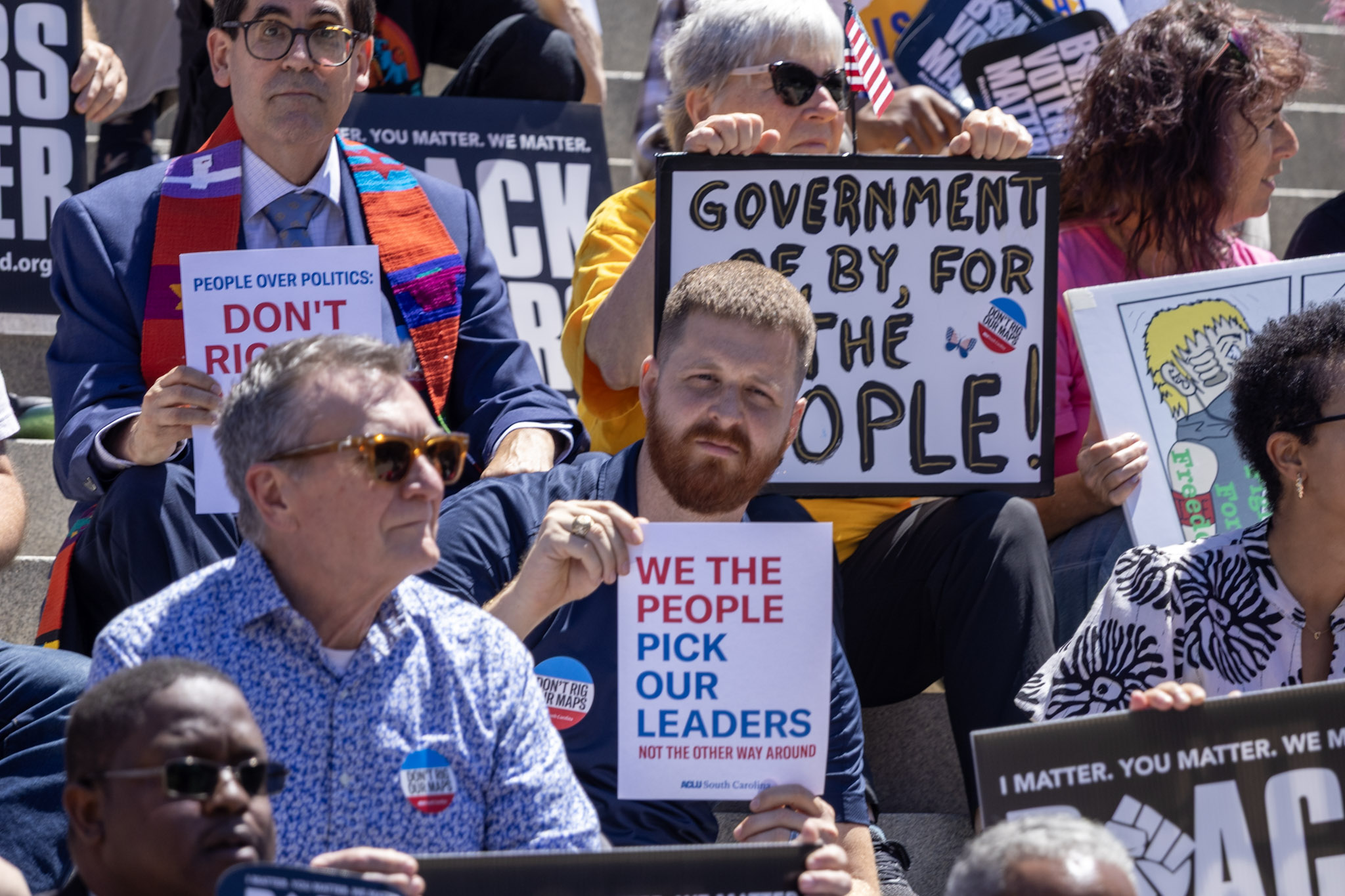
Photo by A Hanus
What else could happen in special session?
When the governor calls a special session, he opens a Pandora’s box. Gov. McMaster has said he wants lawmakers to consider redistricting and finalizing the budget, but anything can happen while the legislature is in session.
There are a lot of loose ends that our lawmakers could seek to tie up during this “overtime” period of the year. Among other things, these bills are still active and have not yet been ratified or signed by the governor:
- H. 4764, which would force many local law enforcement agencies to sign collaboration agreements with Immigration and Customs Enforcement (ICE)
- S. 1095, a total abortion ban
- H. 4760, criminalizing the medications mifepristone and misoprostol that are used for abortions and emergency postpartum care
- H. 4763, the so-called “HALO Act,” which would criminalize standing too close to police
Some of these bills are closer to passing than others. For example, while the total abortion ban S. 1095 has not made it to the Senate floor yet, the abortion medication ban H. 4760 has already passed the House and received a favorable report from a Senate committee.
People ask us sometimes if a bill is officially dead. Unfortunately, we can’t declare a bill dead until the legislature packs up and goes home for the year.
One piece of good news
Even during a bleak legislative session and a direct assault on democracy, South Carolinians have successfully pushed some positive changes forward. We’ll recap some more of these changes at a later date, but for today we’ll highlight a bill that will significantly improve the rights of tenants in our state.
Under current state law, a single eviction filing can follow a person for life, locking them out of many housing rentals. House Bill 4270 would remove eviction filings from a person’s public court records after seven years, effectively removing what is sometimes called a “Scarlet E.”
On May 14, after passing the House and Senate, H. 4270 was ratified. It now sits on the governor’s desk awaiting his signature.
This bill enjoyed bipartisan support in the legislature and had the backing of the South Carolina Tenant Union and the South Carolina Housing Justice Coalition. It would not have advanced without everyday South Carolinians writing, calling, and showing up to push for it.
A better world is still possible. Keep that in mind as we enter another dark week for democracy.
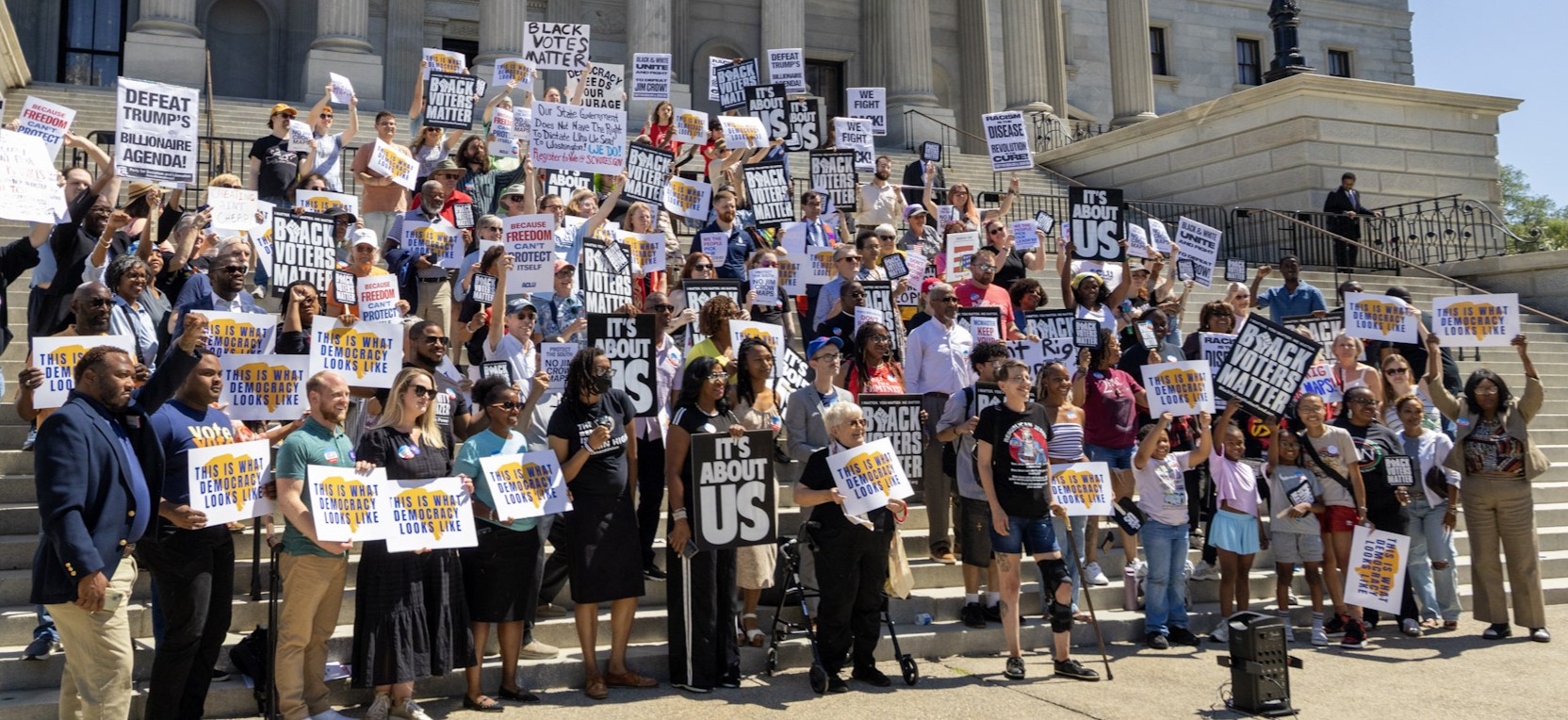
Photo by A Hanus
