
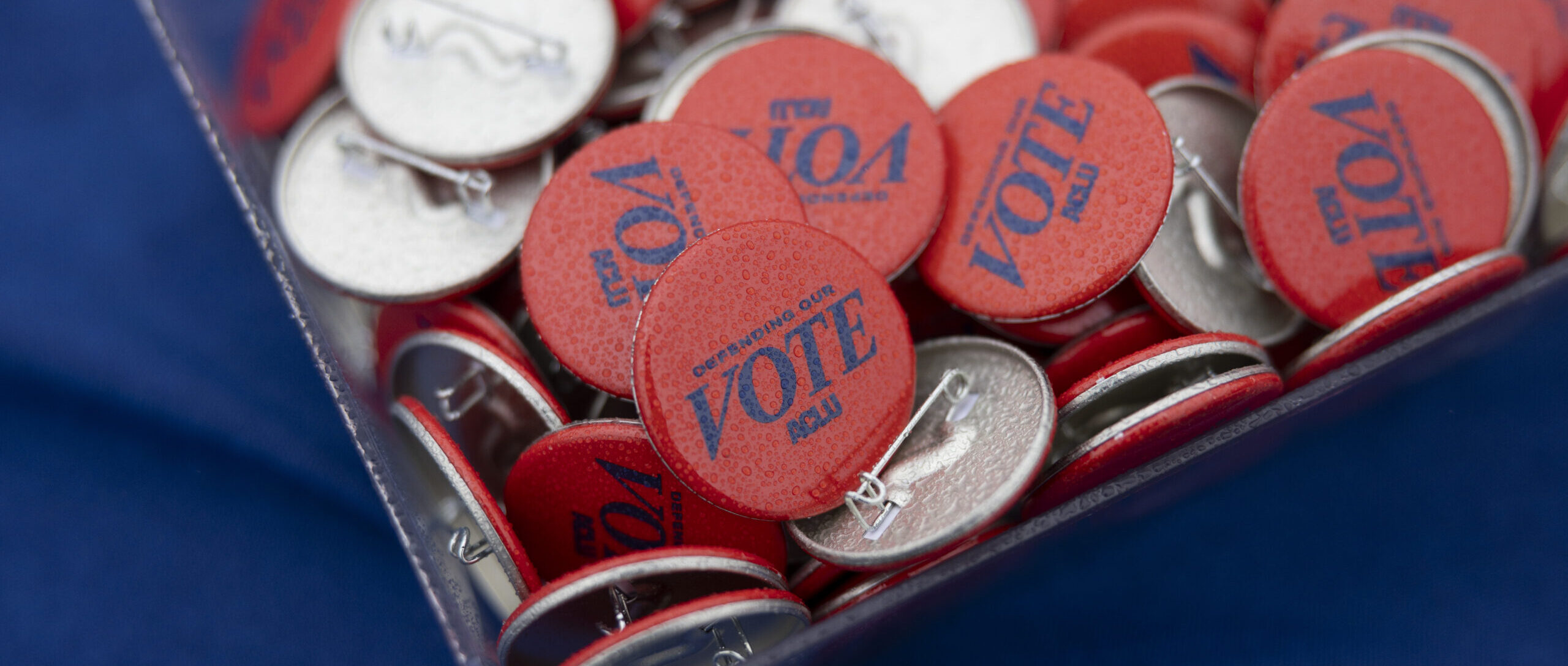

During each election season at the ACLU of South Carolina, we keep an eye out for trends in the voting process, good or bad. We want every qualified South Carolinian to cast their ballot with confidence and know that it will count.
Today we’re sharing some takeaways from our election protection work in the 2026 midterm election. The short version: The vast majority of voters were able to cast their ballot without a hitch. But we did identify some obstacles to voting that we’ll be looking to address. In the meantime, if you believe your voting rights have been violated, please fill out our Share Your Story form to let us know more.
The S.C. Department of Motor Vehicles continues to have problems transmitting voter information to election officials. During ballot certification hearings in at least 8 counties, local election officials, poll workers, or voters noted that they had problems with the DMV transmitting changes of address, name changes, or new voter registrations to the State Election Commission. In some cases voters were still able to cast provisional ballots that were accepted by county election officials, but the ongoing pattern of errors is cause for concern.
DMV voter registration problems came onto our radar in the 2024 election, when failures in the state agency prevented close to 2,000 young, first-time voters from participating in the 2024 election. We filed an emergency lawsuit and followed up until the DMV assured the public in 2025 that it had fixed the software problem affecting these young voters. We are still working to understand the problems that were reported in the 2026 election.
Disabled voters continued to face accessibility challenges. Polling locations are required by law to provide certain accommodations to disabled voters. But in this election as in previous elections, we continued to get reports of polling places with insufficient accessible parking, a lack of ramps, missing signs, and failures to provide curbside voting opportunities.
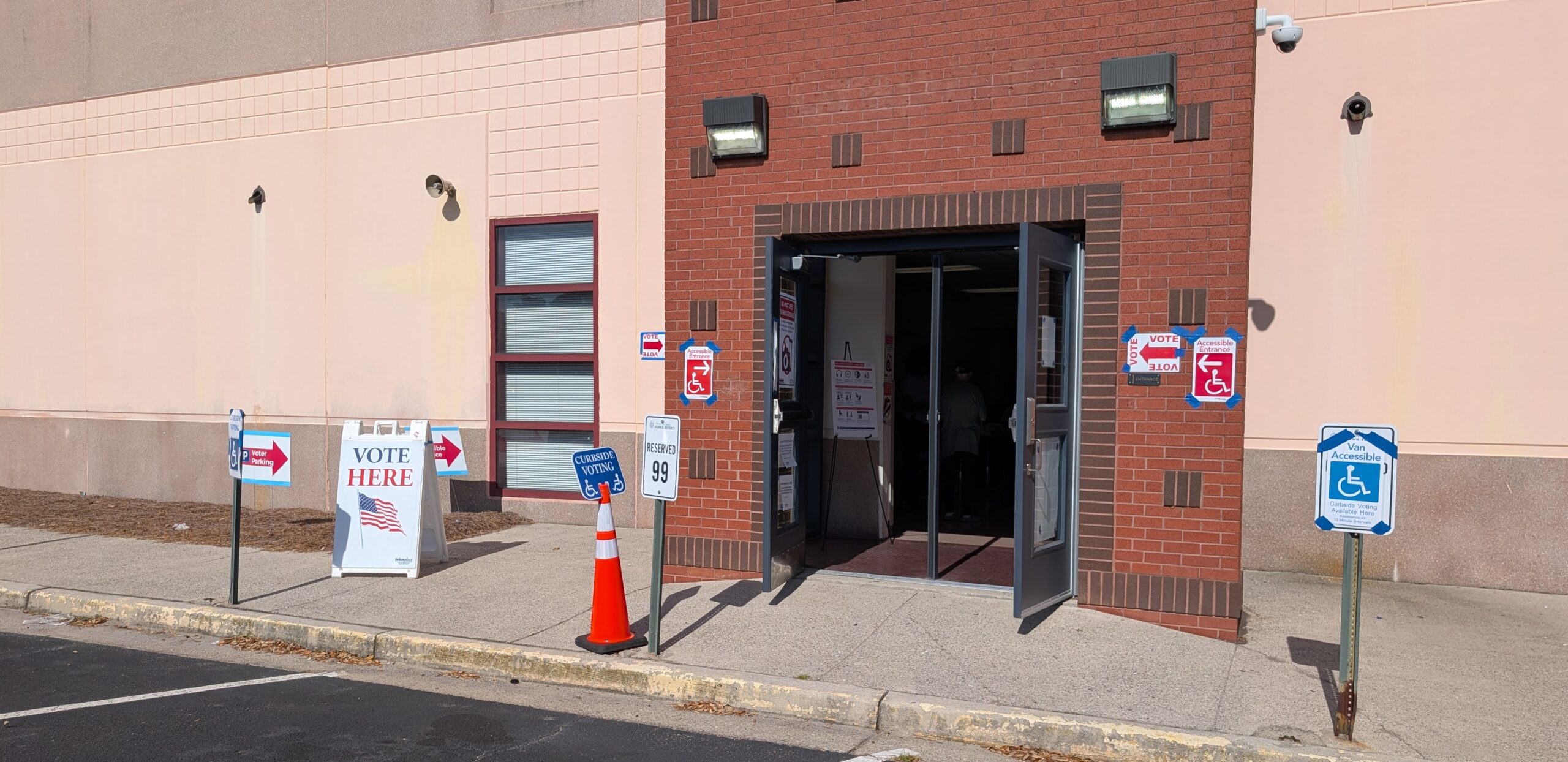
In many cases, Election Protection Hotline operators were able to contact county election offices and resolve accessibility issues on the day of the election. Our work protecting disabled voters’ rights at the ACLU of South Carolina continues beyond Election Day, though. Our lawsuit challenging South Carolina’s restrictions on voter assistance, South Carolina NAACP v. Wilson, is ongoing in federal court.
South Carolinians showed up in record numbers to protect voting rights. Poll monitors are volunteers who visit polling sites throughout early voting and on Election Day to check for accessibility problems, instances of voter intimidation, and other obstacles that can make it difficult for people to cast a vote.
The ACLU-SC and coalition partners including the League of Women Voters, Be the Ones, and Black Voters Matter recruited about 150 volunteers to attend poll monitor training from the Legal Defense Fund (LDF) and fan out across the state during this election. This was the greatest number of volunteers in recent memory according to LDF organizers.
After ballots were cast, ACLU-SC staff and volunteers attended ballot certification hearings, where county election boards make decisions on whether to accept provisional and failsafe ballots. We observed hearings in 12 counties, our largest coverage area yet. Everywhere we went, we were encouraged to see so many of our neighbors joining the work of defending democracy.
Technical issues with voting machines continue to vex voters. Particularly during early voting, voters across the state called the non-partisan Election Protection Hotline (866-OUR-VOTE) to report that they had trouble with the touchscreens on ballot-marking machines. In some cases voters reported that the touchscreen was indicating they had chosen different candidates than they intended. In Dorchester County, early voters reported that some polling sites had trouble scanning driver’s licenses. Some voters received incorrect ballots and had to request help from poll workers in order to vote in the correct elections for their area.
Voters were understandably frustrated. Because of the volume of reports, we advised voters to check their vote twice — first on the monitor and then on the paper ballot before placing it on the ballot-reading scanner. For future reference, remember that your vote is not cast until you place your marked paper ballot in the scanner, and you can ask a poll worker for assistance with a new ballot at any point before you cast it.
Some absentee voters experienced logistical headaches. South Carolina voters can request an absentee ballot in advance if they know they will be unable to vote in person during early voting or on Election Day. Unfortunately, we heard reports from voters who requested a ballot but did not receive it in the mail in time to fill it out and return it.
Voters who request an absentee ballot but have not filled it out and returned it can vote early in person or on Election Day, provided they only cast one ballot. Do not attempt to vote twice by returning an absentee ballot and voting in person. For more information about absentee voting, see the S.C. Election Commission website.
A surge in early voting made for shorter lines on Election Day. South Carolinians cast more than 1 million votes during the 2-week early voting period, setting a new state record for a midterm election. This surge in early voting may have taken some pressure off of the election system on Election Day itself. Anecdotally, voters and poll monitors reported that lines were shorter when it came to the final day of voting on Election Day. As more South Carolinians participate in early voting, counties should consider opening more early voting sites as a way to expand access to the ballot.
The State Election Commission website went out of service during crucial voting times. Voters frequently check scvotes.gov on the day of an election to confirm their polling location, double-check their registration status, download a sample ballot, or look up other important information related to the voting process. Unfortunately the website went down at certain points during Election Day, causing frustration for voters. As our state’s population grows and voter turnout trends upward, the SEC should consider what upgrades are necessary to keep voting information available during peak demand.
A lack of clarity on candidate advertising boundaries caused some friction at polling places. Under state law, it is illegal to display signs, stickers, buttons, brochures, or any other materials promoting a candidate within 500 feet of the entrance to a polling place. To bring clarity in future elections, poll managers may want to consider putting out traffic cones or other markers to show where the 500-foot boundary is. For more complete rules on signs and candidate activities in the vicinity of polling places, see the State Election Commission’s Rules for Candidates flyer.
Our work continues, and we can use your help! If you are interested in helping during future elections with the Election Protection Hotline, LDF non-partisan poll monitor program, or the observation of county ballot certification hearings, fill out our Volunteer Interest Form and mark Voting Rights as one of your interest areas.
