Court Cases
All Cases
40 Court Cases
Aug 3, 2026
S.C. Republican Party v. Bolchoz
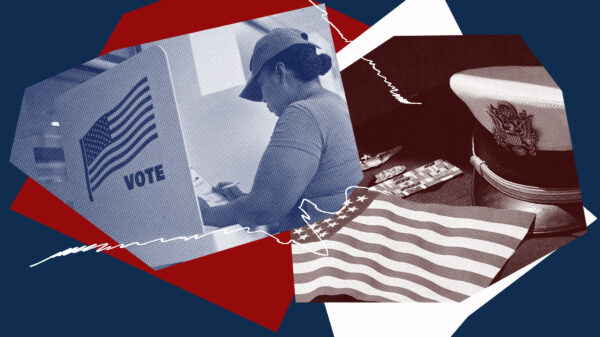
On July 6, 2026, the South Carolina Republican Party sued State Election Commission Chairman Robert Bolchoz and other election officials in federal court, demanding that the state government force voters to register with a party to vote in primary elections.
Under South Carolina’s existing semi-open primary system, any registered voter may choose to vote in one major party’s primary during an election cycle. But if the state’s dominant political party succeeds in court, it will effectively lock independent voters out of these pivotal elections.
The ACLU of South Carolina represents two nonpartisan organizations of military veterans, Veterans for All Voters and The Chamberlain Network, who filed a motion to intervene in the case on the side of the state defendants. Both organizations advocate for open, fair, and transparent elections, and both represent politically independent veterans who would be excluded from voting in primaries if the state closes primaries.
Jul 6, 2026

O.R. v. Greenville County
Library patrons sued South Carolina’s most populous county for purging literature by and about LGBTQ+ people from its public library collection.
May 29, 2026
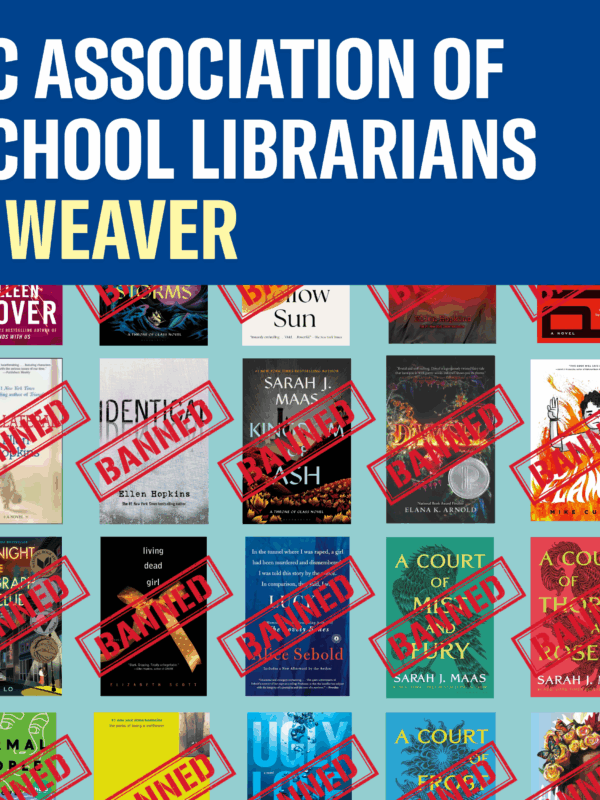
SCASL v. Weaver
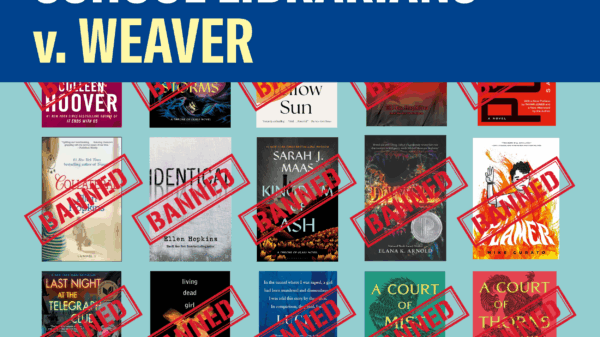
In October 2025, South Carolina public school librarians and students filed a lawsuit asking a federal court to block enforcement of the state’s unconstitutional book banning regulation and a classroom censorship memo issued by the state education superintendent.
The lawsuit challenges the constitutionality of Regulation 43-170, which bans all materials in kindergarten through 12th grade public schools if they contain descriptions or depictions of “sexual conduct.” This regulation, which was promoted by Superintendent Ellen Weaver and took effect in June 2024, led to the banning or restriction of 22 books statewide — the largest number of state-mandated school book bans in any state, according to PEN America. (See the full list of books below.)
The lawsuit also challenges a memorandum issued by Superintendent Weaver on March 14, 2025, that requires state employees to indoctrinate students according to the superintendent’s views on sex, gender, race, and American exceptionalism. The memo prohibits 14 ideas and concepts from S.C. Department of Education materials, including “implicit bias,” “restorative justice,” “cisgender,” and “social-emotional learning,” although it notes that its list of taboo concepts is “not exhaustive.”
The plaintiffs in the lawsuit are the South Carolina Association of School Librarians (SCASL) and three minor public school students. The suit challenges the superintendent’s censorship regime under the First and Fourteenth Amendments to the U.S. Constitution.
Mar 11, 2026

Taylor v. Rankin
In the fall of 2025, four South Carolina lawmakers threatened to block state funds to the private Presbyterian College in Clinton, S.C., unless the college fired an English professor for her writing.
The professor, Dr. Emily Taylor, had published an essay titled “Dying to Be Men: American Masculinity as Death Cult” that was critical of the late conservative activist Charlie Kirk. The essay concluded:
“I’m sorry for Charlie Kirk and all the other men like him that have been raised in this America and with these ideals of masculinity. I’m sorry that he decided to adopt this hateful ideology and to profit from it. And as the mother to a boy and a girl, my heart breaks for the America these children are growing up in. Here’s hoping we can save ourselves.”
In response, State House Representative Luke S. Rankin* called for Dr. Taylor’s firing. He followed up that threat with a letter, co-signed by fellow State House Representatives Mark Willis, John McCravy, and Craig Gagnon, that threatened to block funds via the Higher Education Tuition Grants Commission unless the college fired her for her speech.
On December 18, 2025, Dr. Taylor resigned because of the threats.
On March 11, 2026, Dr. Taylor sued the four state lawmakers in U.S. District Court for what the lawsuit describes as “textbook, unconstitutional jawboning.” She is asking the court to declare the state lawmakers’ actions unconstitutional and order them to rescind their letter and threats. She also seeks compensation for back pay, lost benefits, and compensatory and punitive damages.
She is represented in the case by the American Civil Liberties Union of South Carolina and by attorney Joshua Snow Kendrick of Kendrick & Leonard, P.C.
Jan 7, 2026
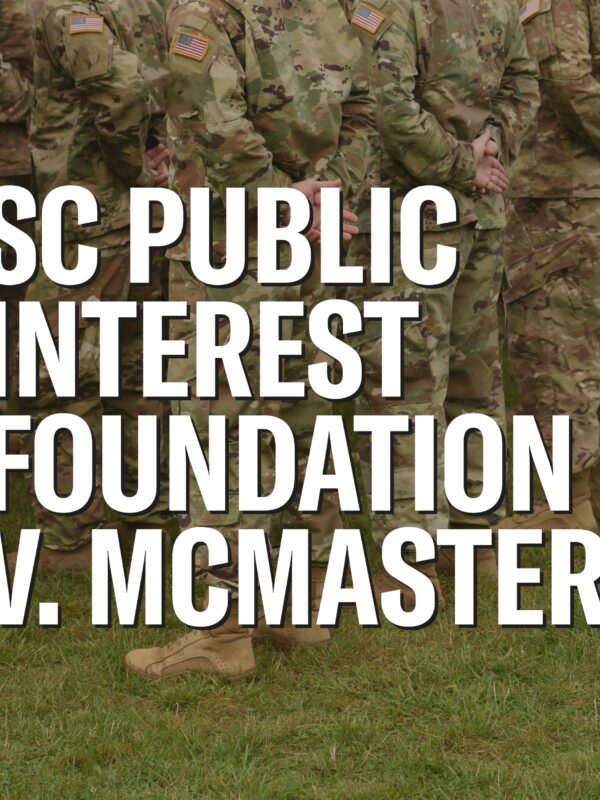
SC Public Interest Foundation v. McMaster
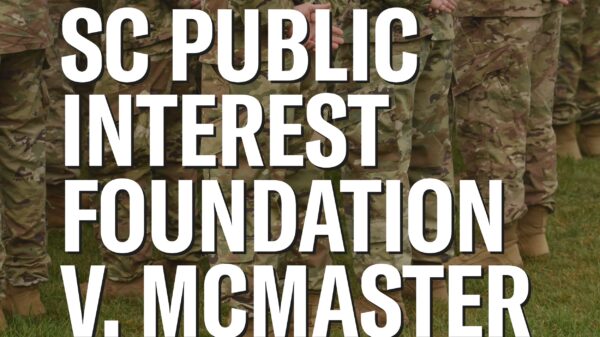
Twice in 2025, at the request of President Donald Trump, South Carolina Governor Henry McMaster ordered hundreds of South Carolina National Guard members to deploy to Washington D.C. While the president claimed the purpose of his request was “to address the epidemic of crime in our Nation’s capital,” the facts did not bear that out. Violent crime was at a 30-year low in the District of Columbia.
During the second deployment, which was launched in December 2025 and estimated to last 90 days, Navy veteran James Weninger and the South Carolina Public Interest Foundation (SCPIF) filed a lawsuit asking the State Supreme Court to stop the deployment and bring the troops home from this blatant act of political theater.
The ACLU of South Carolina and Democracy Forward represent the plaintiffs in this case.
Jan 3, 2026
Bregy v. Clemson
Clemson University fired a faculty member in September 2025 for sharing another person's Facebook post via his personal account that was critical of the late conservative pundit Charlie Kirk. The full text of the post is available below.
The public university fired a highly qualified assistant professor under pressure from politicians who threatened to defund the university if it did not bend to their will. Faculty at Clemson say that the firing “sent shockwaves through the faculty, triggered an emergency meeting of the faculty senate, and has fractured the faculty’s trust and confidence in the Provost, University President, and Board of Trustees.”
The plaintiff in this case, Dr. Joshua Bregy, worked as an assistant professor in Clemson’s Department of Environmental Engineering and Earth Sciences. He researched the reconstruction of hurricane records and taught both undergraduate and graduate courses. Because Dr. Bregy is the only faculty member who is qualified to teach those courses, the university scrambled to meet the needs of its students after firing him.
Dr. Bregy’s complaint is asking a federal court to declare his firing unconstitutional under the First Amendment, order the university to reinstate him, and award back pay as well as compensatory and punitive damages.
Dec 5, 2025
SC NAACP v. Wilson
Disabled voters and the NAACP South Carolina State Conference filed a lawsuit in December 2025 to challenge South Carolina’s restrictions on voter assistance, arguing that these state laws violate the federal Voting Rights Act and will impede their ability to vote in the 2026 primaries and general election.
The lawsuit challenges state laws that have made it difficult or impossible for many disabled South Carolinians, including those living in nursing homes and congregate care facilities, to exercise their voting rights.
Why this case?
We took this case to protect the right to vote. South Carolina law restricts who can provide and receive voting assistance and imposes felony criminal penalties on those who assist in the voting process in violation of South Carolina’s restrictions. The lawsuit challenges those State laws under the Supremacy Clause of the U.S. Constitution, arguing that they violate Section 208 of the Voting Rights Act.
Congress added Section 208 to the Voting Rights Act in 1982, finding that allowing disabled voters to choose their preferred assistor was “the only way to assure meaningful voting assistance and to avoid possible intimidation or manipulation of the voter.” It also found that the denial of assistance to low-literacy voters would conflict with the Voting Rights Act’s prohibition on literacy tests, which were long used to disenfranchise Black voters.
We are asking a federal court to block enforcement of the following state-level restrictions on voter assistance, citing the Voting Rights Act and the Supremacy Clause of the U.S. Constitution:
Who is eligible to receive assistance. South Carolina law prohibits voting assistance “of any kind” except for “those persons who are unable to read or write or who are physically unable or incapacitated from preparing a ballot or voting.” This rule is narrower than the federal Voting Rights Act, which guarantees assistance for all voters with disabilities.
The ability of non-family members to assist voters. State law makes it a felony for many disabled voters to rely on anyone other than a member of their “immediate family” to request or return their absentee ballot. Data from the U.S. Election Assistance Commission shows that, among disabled voters who rely on assistance to vote, a majority prefer to rely on a non-family member to assist them. South Carolina voters are only allowed to rely on an “authorized representative” outside their immediate family in specific circumstances, including if they are confined to home or physically incapable of accessing polling places.
Who is authorized to assist with voting. The Voting Rights Act guarantees that voters with disabilities may choose anyone to assist them, with only two narrow exceptions related to their employer or union. In contrast, South Carolina law imposes additional restrictions, including the requirement that an authorized representative is registered to vote in South Carolina.
How many voters a person can assist. South Carolina law prohibits anyone from requesting more than five absentee ballot applications or returning more than five absentee ballots for others. This rule harms voters at nursing homes and other congregate care facilities, where many residents often seek assistance from a single social worker or other employee, and violates voters’ federal right to rely on an assistor of their choice.
The latest
Plaintiffs filed the lawsuit in the U.S. District Court for the District of South Carolina on Dec. 5, 2025. The lawsuit seeks a permanent injunction of the State’s unlawful restrictions on voting assistance.
Apr 18, 2025
Ariwoola v. Noem
An international Ph.D. student at the University of South Carolina faces the threat of arrest and deportation as the U.S. Department of Homeland Security (DHS) has suddenly and unilaterally terminated his F-1 student status. We're suing to defend his due process rights.


Stay Informed
Sign up to be the first to hear about how to take action.
By completing this form, I agree to receive occasional emails per the terms of the ACLU’s privacy statement.
By completing this form, I agree to receive occasional emails per the terms of the ACLU’s privacy statement.
